
Brown root rot
Phellinus noxius
The causal agent of this disease is the basidiomycete fungus Phellinus noxius, which belongs to a group of wood-decaying pathogens. This fungus is capable of infecting a wide range of woody and shrub species, causing the destruction of root systems.
What the section contains
Brown root rot
The biology of the pathogen involves the development of mycelium, which penetrates deep into plant tissues, breaking down lignin and cellulose. The fungus leads a cryptic lifestyle, spreading through root-to-root contact and plant debris in the soil.
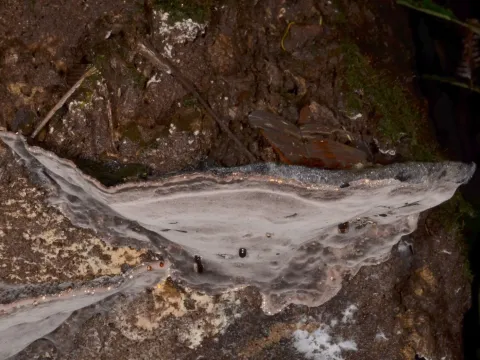
In the natural environment, the parasite forms fruiting bodies on dead tree parts, which serve as a source of spores for further spread. The primary danger lies in its ability to remain viable in the soil for a long period.
The disease is classified as a systemic root rot, leading to the gradual death of tissues. The pathogen affects both perennial forest stands and valuable agricultural crops.
The fungus is of particular importance in tropical agriculture, as it affects economically vital crops such as cocoa, rubber trees, coffee, and various fruit trees.
The primary sign of infection is a slowing of plant growth and premature yellowing of the leaves. As the disease progresses, crown wilting is observed, first affecting individual branches and eventually the entire tree.
Upon examination of the root collar, characteristic dark, often dark-brown or black crusts of mycelium are visible, adhering tightly to the bark. In later stages, the bark in the root collar area begins to peel away.
The tissues of infected roots become brittle, lose their structural integrity, and turn a brownish color. On a cross-section of the root, a necrosis zone with a distinct dark demarcation line is often visible.
In the soil around the base of the trunk, rhizomorphs—thread-like structures through which the pathogen spreads from infected to healthy plants—can sometimes be found. Brown fruiting bodies of the fungus may appear at the base of dead trees.
The appearance of a diseased cocoa tree is characterized by a «tired» crown: leaves lose turgor, become smaller, and fruit yields decrease, with fruits often dropping before full maturity.
Active development of Phellinus noxius is favored by high air and soil temperatures typical of tropical climates. Moisture is a critical factor, as excessive soil moisture accelerates mycelial growth.
Infection often occurs in plantations established on sites of recently cleared forests. The remains of old tree roots in the soil serve as primary infection reservoirs from which the pathogen spreads to young saplings.
Poor agricultural practices, such as mechanical root damage during inter-row cultivation, significantly increase the risk of pathogen entry. Each wound becomes an entry point for the fungal infection.
Dense plantings and a lack of proper soil aeration create a favorable microclimate for the rapid spread of the fungus. Failure to monitor the root zone leads to the formation of infection centers.
Increased soil acidity and a deficiency in micronutrients can weaken the immune systems of crops, making them more susceptible to Phellinus noxius infection.
Brown root rot causes significant damage to agriculture, leading to total loss of productivity in infected plants. In the case of cocoa plantations, recovery requires substantial financial investment.
The disease leads to a sharp decline in yield: the affected tree stops bearing fruit and dies within a few seasons. This creates gaps in the field that require long-term disinfection.
The infection spreads in patches, making the simple removal of individual plants insufficient. The fungus gradually encompasses neighboring trees, creating «gaps» in the plantation.
Economic losses are exacerbated by the costs associated with grubbing out infected trees along with their root systems to prevent healthy roots from contacting the diseased remnants.
The infection harms not only individual farms but also leads to the degradation of the soil layer, as the fungus alters the structure of organic compounds in the root zone.
The primary control method is the thorough clearing of the land of all stumps and tree roots before establishing new plantings. This is a radical but necessary way to break the pathogen's life cycle.
It is important to maintain proper planting distances and avoid damaging roots during weeding. Quarantine measures are recommended to prevent the introduction of the infection through infected planting material.
Upon detection of disease outbreaks, it is necessary to immediately isolate infected plants by digging them up along with the surrounding soil ball. The pit should be left open for drying and exposure to sunlight.
To improve soil health, organic fertilizers can be applied to stimulate the development of beneficial antagonistic microflora capable of suppressing Phellinus noxius growth.
- Regular monitoring of tree root collars.
- Removal of weeds that may serve as alternative hosts.
- Disinfection of garden tools after working with diseased trees.
- Use of resistant varieties and rootstocks where available.