
Brown leaf spot of poplar
Drepanopeziza brunnea
Description
Symptoms
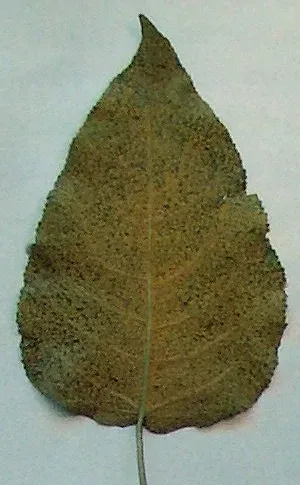
The first symptoms typically appear in mid-summer as small, circular, dark brown spots on the upper surfaces of the leaves.
As the infection progresses, these spots expand and may coalesce, leading to large necrotic areas that eventually turn the entire leaf yellow or brown.
Tiny black fruiting bodies, known as apothecia, become visible to the naked eye in the centers of the older spots on the leaf surface.
Heavy infection causes the leaves to curl, wither, and drop prematurely, often leaving the branches bare long before autumn.
In severe cases, the fungus may also cause elongated brown lesions on the young shoots, which can hinder the growth and structural development of the branch.
Pathogen
The causal agent of this disease is the fungus Drepanopeziza brunnea, which specifically targets members of the Populus genus.
The pathogen overwinters as mycelium and fruiting bodies within the fallen leaf litter, remaining dormant until spring conditions allow for new growth.
During the spring, the fungus produces ascospores that are spread via wind and rain splashes onto the newly emerging foliage of the host trees.
Throughout the growing season, the fungus produces secondary spores (conidia) that facilitate multiple cycles of infection, rapidly spreading the disease.
The fungus is highly host-specific, and the severity of the outbreak often depends on the susceptibility of the particular poplar clone being grown.
Conditions for development
The development of brown leaf spot is favored by warm, humid weather, particularly during rainy periods in late spring and summer months.
Dense planting schemes that restrict air circulation within the canopy allow for high humidity levels, which are critical for fungal spore germination.
Temperatures ranging from 18 to 25 degrees Celsius provide the ideal environmental conditions for the fungus to colonize host tissues effectively.
Trees that are already under stress, whether due to nutrient deficiency or pest infestations, are significantly more susceptible to infection.
Extended periods of leaf wetness, such as those caused by prolonged rainfall or heavy morning dew, significantly increase the risk of infection spread.
Why it matters
The disease impairs the plant's ability to perform photosynthesis, leading to reduced energy storage and hindered growth of the tree.
Early leaf abscission weakens the overall vigor of the tree, making it more vulnerable to winter damage and secondary infections or pests.
In nurseries, the disease can cause significant economic losses by killing young saplings or making them unsuitable for commercial distribution.
The loss of foliage ruins the aesthetic appeal of poplars used in landscaping, urban parks, and shelterbelts along roadsides.
Persistent annual infection can cause dieback of terminal shoots, leading to stunted or deformed tree shapes that compromise the tree's longevity.
Protection
Sanitation is the most effective cultural control method; all fallen leaves should be collected and disposed of to remove the source of inoculum.
In nursery or high-value landscapes, fungicide applications early in the season can effectively suppress the spread of the fungus.
Selecting and planting resistant clones or hybrids is the most sustainable approach to managing the disease in long-term forestry projects.
Proper spacing and regular crown thinning help improve air circulation, effectively lowering the humidity around leaves and inhibiting fungal growth.
- Use of certified disease-free stock when planting new poplar areas.
- Consistent monitoring for early spotting to initiate timely treatments.
- Maintaining optimal soil health and fertility to boost tree resistance.
Discussion
No discussions yet — be the first.