
Brown snow blight
Herpotrichia coulteri
Description
Symptoms
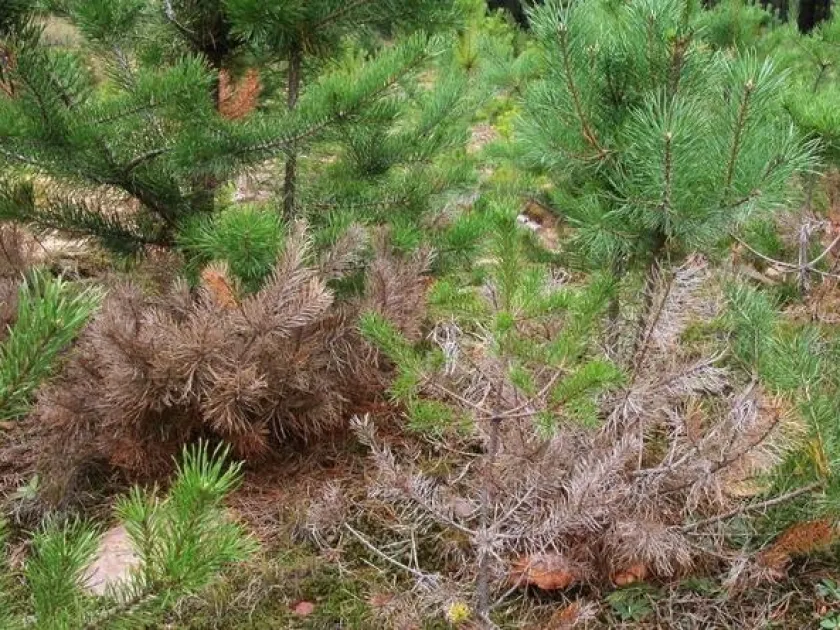
The most distinctive symptom is the presence of a thick, felt-like, dark-brown or black fungal mat covering the needles and twigs as soon as the snow recedes.
Infected needles are often matted together by the fungal mycelium. They quickly lose their green color, turn grayish-brown, become brittle, and eventually fall off prematurely.
Small black fruiting bodies, known as perithecia, appear on the surface of the dead needles. These serve as a key visual identifier for field diagnostics.
The damage usually starts in the lower canopy, which remains covered by snow for the longest period. As the infection progresses, it can spread upward through the branch structure.
Severely affected trees display sparse foliage and dead branches. The overall appearance is ragged and withered, which severely impacts the visual aesthetics of ornamental trees.
Pathogen
The disease is caused by the ascomycete fungus Herpotrichia coulteri. This pathogen is specifically adapted to infect coniferous species in high-altitude or northern environments.
The fungus is a psychrophile, meaning it thrives at low temperatures. It continues to grow as mycelium beneath a thick snowpack, even when air temperatures are well below freezing.
Its life cycle is closely synchronized with the duration of the winter season. Once the snow melts, the fungus produces fruiting bodies that release spores to initiate new infections.
The mycelium forms a thick, dense mat that covers branches, effectively smothering the needles and preventing necessary gas exchange for the plant's health.
The pathogen remains viable in the forest litter or on infected branches throughout the warm season, waiting for the return of the favorable cool, moist conditions of winter.
Conditions for development
The development of Brown snow blight is heavily dependent on a deep, persistent snowpack that stays on the ground for several months. This insulation is crucial for the fungus.
High relative humidity during the autumn is a prerequisite for successful infection. Damp autumns allow the fungal spores to germinate and establish the initial mycelium network.
Poor ventilation in crowded plantings creates a stagnant microclimate. This lack of airflow prevents the needles from drying out, favoring fungal colonization.
Low-lying terrain where snow drifts accumulate and melt slowly is a high-risk area for this disease. These micro-sites are prone to severe outbreaks every year.
Young, small-stature conifers are particularly vulnerable because their entire canopy can be buried under the snow, making them susceptible to systemic branch infection.
Why it matters
The primary harm is the destruction of needles, which stops the photosynthetic process. This leads to a severe loss of energy reserves and overall weakening of the tree.
Premature needle drop and subsequent branch death can lead to the mortality of young trees if the infection is heavy and persistent over several consecutive years.
Weakened trees become susceptible to secondary opportunistic pests, such as bark beetles and wood-boring insects, which often finalize the tree's demise.
The economic impact on forestry and nurseries is significant, as infected stock is often unsellable and requires intensive, costly management or total destruction.
In landscape settings, the loss of foliage density and the presence of dead branches lead to the total loss of the tree's ornamental value and structural integrity.
Protection
Sanitation is the most effective management strategy. Pruning and destroying infected branches reduces the inoculum potential significantly for the upcoming season.
Chemical control involves the application of fungicides, particularly copper-based or systemic products, in late autumn just before the first permanent snowfall.
Proper site selection is vital. Avoid planting susceptible conifers in areas prone to deep snow accumulation or areas with poor air drainage.
- Spacing trees adequately to encourage airflow and light penetration.
- Removing debris and fallen needles from around the base of the trees.
- Maintaining tree vigor through balanced fertilization and proper irrigation.
- Inspecting nurseries and landscapes immediately after snowmelt for early signs.
Where possible, choose resistant or less susceptible species for high-risk areas to reduce the long-term dependence on chemical treatments and intensive maintenance.
Discussion
No discussions yet — be the first.