
Brown rust of cereals
Puccinia montanensis
Description
Symptoms
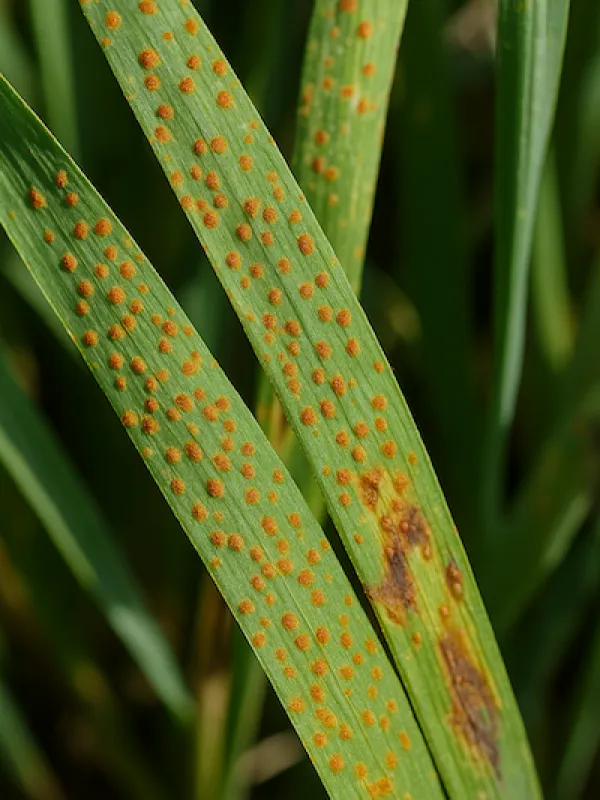
Initial symptoms appear as small, scattered, round or oval pustules on the leaf surface, characterized by a distinct brown or reddish-brown coloration.
As the disease progresses, a chlorotic halo often forms around each pustule, indicating the depletion of host resources at the site of fungal infection.
When the spore mass matures, the plant epidermis ruptures, releasing a powder-like cloud of urediniospores that easily detach and spread with any air movement.
In cases of high infection intensity, the leaves undergo premature yellowing, withering, and necrosis, which significantly reduces the effective assimilation area of the crop.
If left unmanaged, the infection can spread to the flag leaf, which is the most critical stage for crop productivity and final grain yield formation.
Pathogen
The causal agent of this disease is the specialized fungus Puccinia montanensis, belonging to the Basidiomycota division. It is an obligate parasite, deriving its nutrients entirely from the living cells of the host plant.
The life cycle of the pathogen involves the alternation of spore stages, allowing the fungus to effectively adapt to shifting environmental conditions throughout the growing season.
Infection sources survive as urediniospores or teliospores on crop debris and alternative wild grass species growing in the vicinity of agricultural fields.
Spore dissemination occurs primarily via wind currents, allowing the pathogen to travel long distances and rapidly infest large areas of cereal crops.
The fungus mainly colonizes leaf blades, disrupting photosynthesis and physiological processes essential for plant growth and grain development.
Conditions for development
The development of the infection is favored by high humidity levels, specifically requiring free moisture such as dew or rainfall on the leaf surface for several hours.
The optimal temperature range for spore germination and mycelial penetration into plant tissues is between 15°C and 25°C.
Dense crop stands create a microclimate with stagnant air and increased humidity, which significantly accelerates the spread of the disease within the field.
Persistent fog and mild temperatures during the spring and early summer act as primary triggers for rapid disease development and the potential for epiphytotic outbreaks.
Excessive nitrogen fertilization can increase plant susceptibility by encouraging lush, soft vegetative growth that is more vulnerable to pathogen colonization.
Why it matters
The primary impact of Puccinia montanensis is the drastic reduction in photosynthetic surface area, leading to severe metabolic stress within the cereal plant.
The disease increases water transpiration through the ruptured epidermis, making plants significantly more vulnerable to wilting and death during periods of water scarcity.
Yield loss manifests as reduced 1000-kernel weight, diminished grain quality, and, in severe cases, the production of shriveled, non-viable seeds.
Depending on the growth stage when the infection begins, yield losses can range from 15% to 40%, impacting the overall economic viability of the harvest.
Infected crops are also more prone to secondary infections by other pathogens and have a lowered resilience to various abiotic environmental stressors.
Protection
The utilization of resistant crop varieties is the most sustainable and effective strategy for minimizing the risk of widespread infection.
Agricultural practices, such as proper crop rotation and the destruction of weed hosts, are essential for reducing the primary inoculum levels in the field.
Implementing optimized sowing dates and planting densities helps prevent stand congestion, thereby promoting a healthier microclimate and reducing disease risk.
When monitoring indicates that the infection threshold has been reached, the timely application of systemic fungicides, such as triazoles or strobilurins, is required.
Regular field scouting is recommended to ensure that control measures are deployed during the early stages of disease development for maximum protective efficiency.
Discussion
No discussions yet — be the first.