
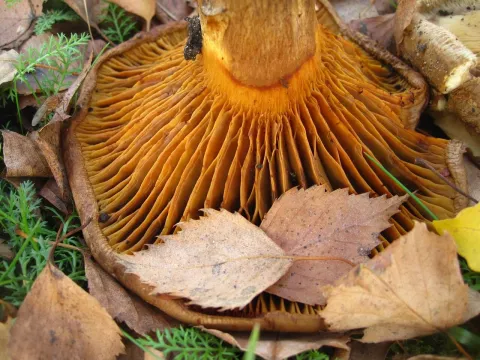
Brown roll-rim
Paxillus involutus
The brown roll-rim is characterized by a distinctive funnel-shaped cap with edges that remain rolled inwards for a significant part of its development.
What the section contains
Brown roll-rim
The coloration of the fruiting body typically ranges from ochre to olive-brown, making it visually distinct within its typical forest habitat.
A primary diagnostic feature is the immediate darkening of the flesh when cut or bruised, usually turning a deep brown or brownish color.
The gills of the mushroom are decurrent, running down the stem, and they also exhibit a tendency to darken upon physical pressure or handling.
The stem is generally short, solid, and cylindrical, appearing lighter in color than the cap, providing a stable support for the fruiting body.
Botanically, Paxillus involutus is an ectomycorrhizal fungus that establishes symbiotic relationships with the roots of various tree species.
While it is not a traditional plant pathogen, its presence significantly alters the root environment of hosts like birch, spruce, and pine trees.
The fungal mycelium forms an extensive network that assists the host tree in nutrient and water uptake, effectively functioning as a beneficial symbiont.
Despite its ecological importance in supporting forest growth, the fungus contains antigens that make it highly toxic and unsuitable for consumption.
Research into this species highlights the complex interactions between soil fungi and temperate forest trees in modern forestry management.
This fungus thrives in moist conditions and prefers acidic soils, commonly appearing in deciduous or mixed woodlands and near forest edges.
Peak fruiting occurs from late summer through late autumn, provided there is sufficient soil moisture and moderate temperatures.
The development of the mycelial mat is heavily dependent on the presence of appropriate host tree roots and stable environmental humidity.
The species demonstrates high adaptability and can colonize disturbed habitats, including tracks and paths in wooded areas, if the soil is sufficiently damp.
Temperatures between 15°C and 22°C are considered optimal for the rapid emergence of the fruiting bodies following heavy rainfall.
The primary danger posed by the brown roll-rim is its cumulative toxicity, which can trigger severe autoimmune reactions in humans.
The ingestion of the mushroom leads to the production of antibodies that destroy red blood cells, resulting in potentially fatal kidney failure.
The toxins within the mushroom are stable and cannot be neutralized by cooking, boiling, or any traditional culinary preservation methods.
Because the symptoms of poisoning can appear suddenly after years of occasional consumption, it is considered a dangerous biological risk.
While not a disease-causing agent for plants, its widespread nature requires caution in areas where mushroom foraging is a common practice.
The most effective strategy for managing the risks associated with this fungus is education and strict avoidance of foraging for this species.
Public awareness campaigns should emphasize that this mushroom is no longer considered safe, despite historical misconceptions about its edibility.
Areas heavily infested with the fungus should be monitored, especially if they are located near recreational trails or agricultural borders.
Maintaining healthy forest ecosystems and balanced soil management can help naturally regulate the prevalence of specific fungal populations.
- Strict prohibition of human consumption.
- Educational identification programs.
- Monitoring of forest environments near agriculture.