
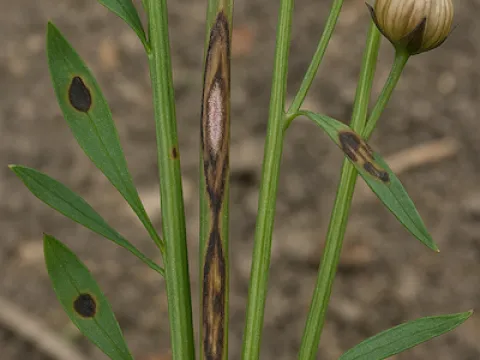
Brown leaf spot of flax
Discosphaerina fulvida
The causal agent of brown leaf spot in flax is the fungus Discosphaerina fulvida (synonym Kabatiella lini). This pathogen specifically targets flax plants, causing significant damage to both fiber and oilseed flax varieties at various growth stages.
What the section contains
Brown leaf spot of flax
The disease is highly infectious and is primarily spread through contaminated seeds and infected plant debris left in the field from previous harvests. The fungus is capable of surviving in the soil, acting as a persistent reservoir for the next season.
The life cycle involves the production of conidia that are easily dispersed by rain splashes, wind, and agricultural tools. Upon landing on healthy plant tissue, the spores germinate and penetrate the host plant's epidermis, establishing an infection.
As the mycelium colonizes the plant, it degrades cellular structures, extracting nutrients that the plant requires for growth and development. This process compromises the overall physiological integrity of the flax crop.
The fungus is well-adapted to the growth cycle of flax, showing increased virulence during the period of rapid stem elongation and budding. Its biological activity is tightly synced with the plant's seasonal development, maximizing its impact on yield.
The first symptoms appear as small yellow to brown spots on the cotyledons and true leaves of young flax seedlings. As the disease advances, these spots expand and coalesce, leading to significant chlorosis and eventual necrosis of the foliage.
On the stems, the fungus causes elongated, brownish lesions often surrounded by a dark margin. These spots eventually become sunken, which weakens the stem structure and makes the plants prone to lodging or breaking under wind pressure.
Under conditions of high relative humidity, a greyish or pinkish growth—comprising the fungus's conidia—may appear on the surface of the lesions. This secondary inoculum serves to spread the infection to neighboring healthy plants.
During the flowering and seed-filling stages, the disease can affect the flax bolls. Infection here leads to shriveled, underdeveloped seeds that often carry the fungus, ensuring the pathogen is carried over to the next planting season.
The overall appearance of an infected field is characterized by stunted growth, premature leaf yellowing and shedding, and a lack of vigor, which reduces the total biomass and quality of the flax fibers.
Brown leaf spot thrives in conditions of high humidity and moderate temperatures, typically between 18 and 22 degrees Celsius. These conditions are optimal for both spore germination and the infection process.
High plant density in fields creates a microclimate characterized by poor air circulation. This humidity trap allows moisture to persist on the plant surface for extended periods, facilitating the colonization of the fungus.
Frequent rainfall during the early stages of flax development is a major driver of disease spread. Raindrops physically splash spores from lower, infected parts of the plant onto higher, healthy leaves and stems, accelerating the epidemic.
Lack of sufficient sunlight and persistent cloudy weather stress the flax plants, lowering their natural resistance to pathogens. Weakened plants are significantly more susceptible to successful colonization by the fungus.
Inadequate crop rotation is a major risk factor. Planting flax in fields where the crop has been grown within the last 6–7 years allows the inoculum level in the soil to rise, significantly increasing the probability of a severe outbreak.
The primary economic impact is the loss of both quantity and quality of flax fiber. Stems damaged by the fungus become brittle and lose their tensile strength, leading to significant fiber breakage during harvesting and processing.
In oilseed flax, the disease negatively affects the oil content and the seed weight. Infected plants produce poorly filled seeds, reducing both the commercial market value and the seed's viability for future planting.
Damage to the stems disrupts the plant's vascular system, hindering the transport of water and nutrients. This results in premature aging and the death of the plant, which prevents the crop from reaching its full yield potential.
Early-season infection can cause the death of seedlings, leading to thin and uneven stands. This often requires reseeding, which increases production costs and may result in suboptimal harvest timing.
If left unmanaged, the disease can reach epiphytotic levels, potentially causing total yield loss in affected areas. This poses a major threat to the financial stability of the farm and reduces regional productivity.
The most important control measure is the use of high-quality, certified seeds treated with effective fungicides. Seed treatments are crucial for eliminating surface-borne inoculum and protecting young seedlings.
Adhering to a strict crop rotation schedule—at least 6 to 7 years between flax crops—is essential to lower the fungal population in the soil. Deep plowing of crop residues helps to accelerate the decomposition of infected material.
Optimizing plant population and row spacing can improve field aeration and sunlight penetration, which helps to keep foliage dry and inhibits fungal development. Balanced fertilization, avoiding excessive nitrogen, also strengthens plant resilience.
Chemical control involving systemic fungicides should be implemented at the first sign of symptoms. Strategic applications during the "seedling" and "budding" stages provide the most effective protection against the spread of the disease.
Continuous monitoring of the field is necessary to catch the onset of the disease. An integrated pest management approach, combining cultural practices with timely fungicide applications, is the most reliable way to manage brown leaf spot.