
Boletellus
Boletellus
The genus Boletellus, belonging to the Boletaceae family, is a group of basidiomycete fungi frequently misidentified as plant pathogens in non-scientific discussions.
What the section contains
Boletellus
In reality, these organisms are not plant diseases; they are essential components of the forest ecosystem, functioning primarily as saprotrophs or mycorrhizal symbionts.
They contribute significantly to the breakdown of organic matter, which enhances soil fertility and provides necessary nutrients for various tree species.
From a biological standpoint, they lack the parasitic mechanisms required to infect agricultural crops, trees, or garden plants.
Mycology categorizes them as beneficial fungi that thrive in association with natural forest environments, far from the concerns of commercial crop disease management.
Signs of Boletellus presence are limited to the emergence of their distinct fruiting bodies, typically characterized by unique surface textures like scales or cracks.
The pore surface underneath the cap often changes color when bruised or handled, a diagnostic feature helpful for identifying specific species within the genus.
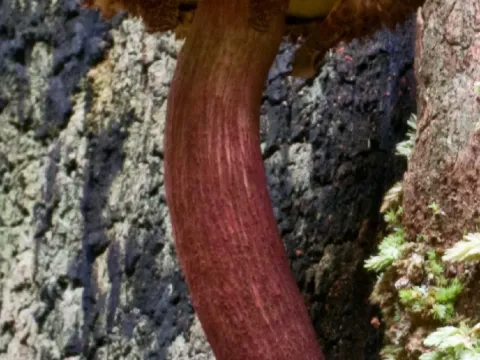
Their stems often display a reticulated or longitudinally ribbed appearance, distinguishing them visually from other bolete varieties found in the same habitat.
Fruiting bodies are most commonly found in clusters or individually on well-decayed logs or deep, moisture-rich forest soil layers.
These mushrooms rarely show aggressive growth patterns that would indicate damage to the host, as they primarily live within the forest floor substrate.
Optimal development of Boletellus fruiting bodies requires high humidity levels and stable forest microclimates throughout the growing season.
They demonstrate a preference for mature forests where deep leaf litter or decaying wood provides consistent moisture and essential organic matter.
Temperature fluctuations directly influence their seasonal activity, with moderate warmth following heavy rains being the trigger for cap formation.
Soil quality, specifically the presence of balanced acidity and low pollution levels, is critical for the long-term survival of their mycelial networks.
These fungi are highly sensitive to environmental degradation, serving as biological indicators of undisturbed and healthy forest ecosystems.
There is no economic harm or agricultural damage associated with the genus Boletellus, as they do not possess pathogenic capabilities.
They pose absolutely no threat to crops, pastures, or ornamental horticulture, making them entirely safe in the context of plant disease management.
In forest management, they are viewed as beneficial contributors to nutrient cycling rather than pests causing tissue decay or necrosis.
The confusion regarding their status as a "disease" often stems from misinterpreting their growth on decaying wood as an active infection of living trees.
They are fundamentally distinct from plant-attacking rusts, blights, or wilts, and their presence should be encouraged in natural woodland settings.
No control measures are necessary or recommended for Boletellus, as it is a beneficial organism that contributes to environmental sustainability.
Standard plant disease management programs do not include this genus, nor are there any registered fungicides for their suppression.
Conservation efforts for these fungi should focus on preserving forest habitats and preventing the over-accumulation of heavy metals or toxic pollutants in soil.
There is no agricultural or silvicultural need to monitor for their presence, as they do not threaten yield quality or tree health.
In summary, Boletellus is a valuable element of fungal diversity that requires protection rather than eradication within its natural ecosystem.