
Boletinellus
Boletinellus
The genus Boletinellus belongs to the family Boletinellaceae within the order Boletales. These are basidiomycete fungi primarily found in forest environments.
What the section contains
Boletinellus
It is crucial to clarify that Boletinellus is not a plant pathogen and does not cause diseases in agricultural crops or ornamental plants.
Biologically, these fungi act as saprotrophs or in some cases as symbiotic partners, contributing to the decomposition of organic matter in the soil.
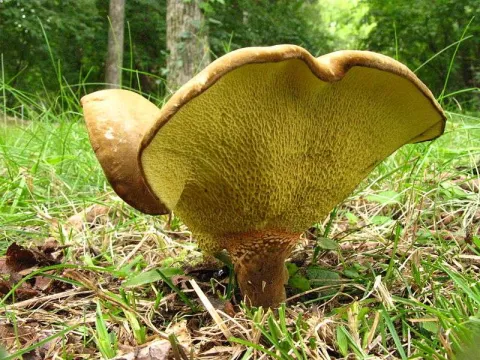
They are characterized by unique morphological features, such as a decurrent, pore-like hymenophore, which distinguishes them from typical mushroom species.
Since they do not infect plant tissues, they are not categorized as agricultural pests or causal agents of plant pathology.
The presence of Boletinellus is primarily indicated by the emergence of fruit bodies, typically found near the roots of host trees like maples.
The mushrooms exhibit a distinctive funnel-shaped cap with a yellow to olive-brown color scheme.
There are no symptoms such as wilting, chlorosis, necrosis, or stunted growth in associated plants caused by this fungus.
Unlike parasitic fungi, Boletinellus does not produce spots or lesions on leaves, stems, or fruits of agricultural crops.
Visual identification is limited to the soil surface; subterranean mycelium networks are generally stable and non-invasive to living roots.
The development of Boletinellus is favored by cool, moist conditions often found in deciduous forests or shaded garden areas.
High levels of soil organic matter and humidity are the primary requirements for the production of fruit bodies.
The fungus is rarely found in intensively farmed soils, as frequent tillage disrupts the stable conditions necessary for its growth.
Spore dispersal occurs via wind currents, allowing the fungus to colonize suitable habitats where moisture and substrate are available.
Microclimatic stability is essential for the colonization process, making it less common in open-field monocultures.
Boletinellus presents no threat to crop health, yield, or quality in any agricultural system.
Because it is not a parasite, it does not induce rot or structural degradation in living trees or plant biomass.
The fungus does not deplete nutrients to a degree that would impact the commercial productivity of surrounding vegetation.
There are no recorded economic losses associated with this genus, confirming its status as a benign organism in the ecosystem.
No agricultural countermeasures are necessary, as the fungus does not interfere with standard growing practices.
No protective measures or fungicides are required for Boletinellus, as it does not pose a risk to plant life.
Applying chemicals against this fungus would be environmentally counterproductive and is strictly discouraged in professional agronomy.
If visual appearance is an issue in ornamental landscaping, mechanical removal of the mushroom fruit bodies is the only step required.
General soil health management is sufficient to maintain a balanced soil microbiome without focusing on non-pathogenic species.
Proper identification is key to avoiding unnecessary chemical inputs that could disrupt the beneficial fungal communities in the soil.