
Boletinellus merulioides
Boletinellus merulioides
Description
Symptoms
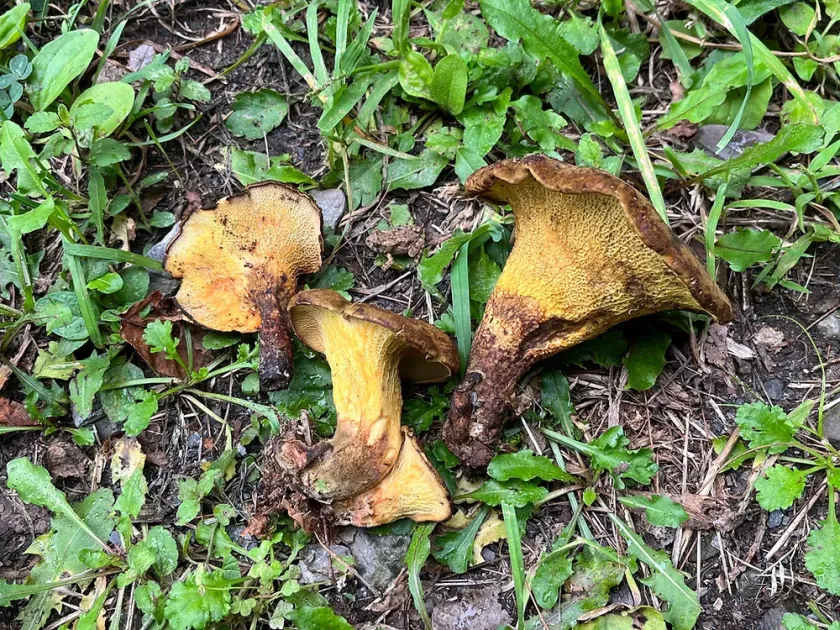
The most visible sign of Boletinellus merulioides is the appearance of fleshy, brownish to yellow fruiting bodies at the base of affected tree trunks.
Affected trees often show signs of foliage chlorosis and thinning, which are results of damaged roots failing to transport water and minerals effectively.
Excavation of the root system reveals a network of fungal mycelia and necrotic, blackened areas on the bark of small and medium-sized roots.
Stunted growth of new shoots is another indicator, indicating that the tree is diverting energy away from development to attempt to repair its root structure.
- brown, veined mushrooms near the root crown;
- yellowing and premature leaf drop;
- root bark necrosis;
- overall tree decline and reduced annual growth.
Pathogen
Boletinellus merulioides is a fungal species that frequently appears in association with specific tree roots, acting as both a mycorrhizal partner and a potential pathogen.
The fungus is distinct for its merulioid, vein-like pore surface, which distinguishes it from many other common forest fungi found in root zones.
Its biological cycle is intricately linked to the presence of woolly aphids, as the fungus thrives on the honeydew secretions produced by these insects on tree roots.
The infection process begins when the fungus colonizes the root tissues, often facilitated by the physiological stress induced by aphid infestations.
Classified within the Boletales order, this organism acts as an opportunist that can cause significant decline in host plants under favorable environmental conditions.
Conditions for development
High moisture levels in the soil are a primary driver for the active growth and sporulation of this fungus during the growing season.
Warm temperatures ranging between 15°C and 25°C facilitate the rapid development of the mycelial network within the rhizospheric zone.
Soils that suffer from compaction or poor drainage tend to hold more moisture, creating a perfect environment for the fungus to establish and persist.
The presence of root-feeding aphids provides a constant supply of sugars, which significantly accelerates the fungal colonization of the host tree roots.
Shaded, low-ventilation areas in nurseries or forests increase the likelihood of infections taking hold and spreading to adjacent trees.
Why it matters
The primary damage caused by this fungus is the gradual death of root hairs, which leads to metabolic stress and long-term decline of the host tree.
By compromising the structural integrity of the root system, the fungus makes the tree more susceptible to uprooting during strong wind events.
In forest nurseries, this pathogen can lead to severe losses, as infected saplings often struggle to survive when transplanted to new locations.
The weakened state of the tree attracts secondary pests and pathogens, creating a synergistic effect that significantly shortens the lifespan of the host.
Management of affected mature trees can be costly and requires significant intervention, often leading to the eventual necessity of removal for safety reasons.
Protection
Management of the aphid population is the most critical preventative step, as removing the aphid food source discourages the fungus from colonizing the roots.
Improving soil drainage around the base of the trees helps create an unfavorable environment for fungal proliferation and moisture retention.
Application of fungicides targeting root-zone pathogens may be utilized in severe cases to halt the progression of the infection and allow recovery.
Regular sanitation, including the removal of dead or rotting woody material near the roots, reduces the inoculum available for the fungus to reproduce.
Enhancing soil health by introducing beneficial microbes can help build a robust rhizosphere that resists colonization by Boletinellus merulioides.
Discussion
No discussions yet — be the first.