
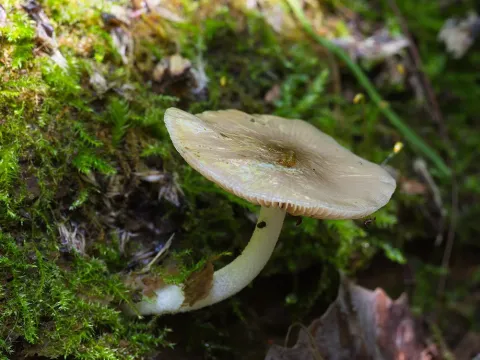
Bolbitius reticulatus
Bolbitius reticulatus
Bolbitius reticulatus is a species of gilled mushroom in the family Bolbitiaceae. It is critical to clarify that this fungus is not an agricultural pathogen and does not cause plant diseases.
What the section contains
Bolbitius reticulatus
In biological terms, this organism is a saprotroph, meaning it derives its nutrients from decaying organic matter, such as woody debris or forest litter.
Unlike parasitic fungi that invade living plant tissues, Bolbitius reticulatus lacks the enzymatic ability to colonize healthy plant organs.
It plays a significant ecological role as a decomposer, breaking down complex organic molecules into simpler substances that improve soil health.
The presence of this fungus is a natural occurrence in healthy soil ecosystems and is not indicative of any pathogenic infection within the garden or field.
The primary sign of this fungus is the appearance of small, distinct mushrooms with a reticulated (net-like) or wrinkled cap surface.
The caps usually exhibit a range of colors from greyish to purplish-lilac, making them recognizable to those familiar with mycological identification.
There are no symptoms of infection on nearby plants, such as necrosis, chlorosis, or wilting, which are typical of genuine fungal pathogens.
The mushrooms appear directly on the substrate—rotting wood, mulch, or rich soil—rather than emerging from plant stems or foliage.
Their presence is transient, usually manifesting during periods of high humidity and rainfall, and they quickly disappear as the substrate dries out.
Growth conditions for Bolbitius reticulatus include high relative humidity and temperatures conducive to fungal sporulation.
It thrives in shaded areas where moisture persists, often found on decaying wood or in areas with high levels of organic mulch.
The availability of complex cellulose and lignin in the medium is the main limiting factor for its colonization.
Soil structure, specifically the presence of leaf mold or decomposed organic matter, supports the development of the mycelial network.
Shaded microclimates in gardens provide the perfect environment for this mushroom to produce fruiting bodies after rain.
Bolbitius reticulatus causes zero harm to crops; it is completely harmless to living flora in agricultural or horticultural settings.
It does not compete with plants for resources, as it occupies a different ecological niche focused on the breakdown of dead materials.
There is no risk of yield reduction, stunted growth, or quality degradation of produce associated with this fungus.
In many cases, the presence of such saprotrophs is a sign of biologically active and rich soil, which can be beneficial for plant growth.
Misidentifying this fungus as a plant disease is the only negative outcome, as it leads to unnecessary concern among gardeners.
No control measures, chemical treatments, or fungicides are necessary or recommended for Bolbitius reticulatus.
If you prefer to remove them for aesthetic reasons, simply clear away the damp woody debris or organic matter that serves as their food source.
Improving drainage in garden beds will reduce the localized humidity that supports fungal growth, naturally limiting their appearance.
Maintaining a well-aerated garden bed and avoiding excessive, waterlogged mulch can prevent the colonization of such saprotrophs.
Standard agronomic practices, such as proper irrigation and plant hygiene, are sufficient to maintain a balanced garden ecosystem without the need for chemical intervention.