
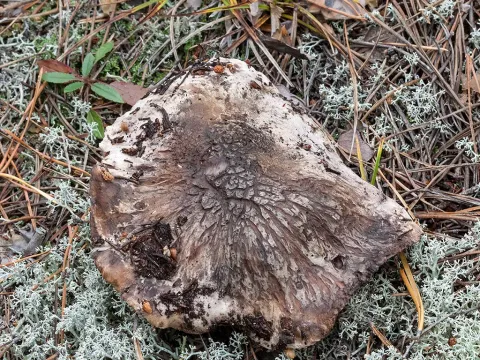
Boletopsis
Boletopsis
The genus Boletopsis comprises a specific group of basidiomycete fungi. It is crucial for agricultural professionals to recognize that this is not a plant disease or an agricultural pathogen.
What the section contains
Boletopsis
Instead, these fungi are known for their mutualistic relationship with trees, primarily within the pine family (Pinaceae). They form ectomycorrhizae, which are mutually beneficial associations between the fungus and the plant roots.
The fruiting bodies of Boletopsis are characterized by a tubular hymenophore and often have greyish caps. While they resemble some edible forest mushrooms, they are distinct in their ecological requirements.
The fungal mycelium colonizes the root tips of trees, extending the root system's effective reach. This allows for improved uptake of water, phosphorus, and other essential nutrients from the soil matrix.
Because they are strictly mycorrhizal, they do not produce enzymes that could lead to the decay or necrosis of living plant tissues, confirming their role as symbionts rather than parasites.
Boletopsis species thrive in mature, undisturbed forest ecosystems. They require very specific microclimatic conditions, including high humidity and stable soil temperatures.
The presence of healthy, mature host trees is essential for the completion of the fungal life cycle. They are rarely, if ever, found in managed agricultural fields or young plantations.
Soil quality, particularly the presence of organic leaf litter and the absence of heavy metal contamination, dictates the success of their colonization and fruit body production.
Frequent forest floor disturbance, such as intensive logging or soil compaction, usually leads to the rapid decline of Boletopsis populations in a given area.
The spread of this fungus is primarily driven by spore dispersal, which depends on stable air currents and the availability of suitable host tree roots in the immediate vicinity.
There is no economic or agronomic damage associated with Boletopsis. It does not infect crops, shrubs, or orchard trees in any way that would impede their development.
The presence of Boletopsis is often considered an indicator of a healthy, biodiverse forest environment, rather than a symptom of a pathological problem.
There are no recorded cases where this fungus has acted as a primary or secondary pathogen. Its ecological niche is dedicated to symbiotic nutrient exchange.
Landowners or foresters should not attempt to apply fungicides against this organism, as it is a beneficial part of the natural microbiome and provides ecological services.
In summary, the classification of Boletopsis as a "disease" is a common misunderstanding; it is a harmless and potentially beneficial forest inhabitant that requires no control measures.