
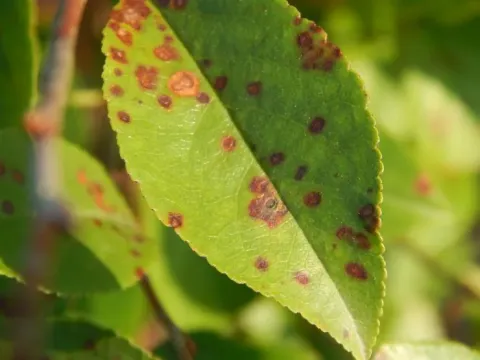
Cherry leaf spot
Blumeriella
The causal agent of the disease is the ascomycete fungus Blumeriella jaapii (anamorph Phloeosporella padi). It primarily targets stone fruit species, particularly cherries and sour cherries.
What the section contains
Cherry leaf spot
The pathogen completes its life cycle by infecting leaves in the spring via ascospores, which overwinter in fallen leaf litter on the orchard floor.
Secondary infections are spread throughout the growing season by conidia produced in white, cushion-like fruiting bodies on the underside of infected leaves.
The fungus is highly specialized, and its survival strategy relies on the accumulation of inoculum within the proximity of susceptible trees.
High levels of humidity and warm temperatures allow the pathogen to colonize the host tissues efficiently after penetrating through the stomata.
Symptoms initially appear on the upper surface of leaves as tiny, circular, reddish-purple or brown spots that develop during late spring.
As the infection progresses, these spots may coalesce, and whitish-pink spore masses emerge on the corresponding spots on the undersides of the leaves.
Affected leaves undergo chlorosis (yellowing) and drop prematurely, often causing significant defoliation as early as mid-summer.
Fruit may also show symptoms in the form of small, depressed, brown lesions that make the cherries unmarketable.
On young twigs, the disease manifests as necrotic lesions, which can weaken the overall structural integrity of young branches.
The development of cherry leaf spot is favored by warm, wet weather conditions with frequent rainfall during the spring and summer months.
Optimal temperatures for fungal sporulation and infection range from 18 to 22 degrees Celsius, coupled with leaf wetness duration of several hours.
Dense canopy structures with poor air circulation create a microclimate that prevents leaves from drying out, significantly increasing infection rates.
The prevalence of the pathogen is often correlated with seasons characterized by high humidity, which sustains the viability of conidia.
Poor orchard sanitation, specifically leaving leaf debris under the tree canopy, facilitates the start of the primary infection cycle each spring.
Severe defoliation caused by Blumeriella jaapii disrupts the tree's photosynthetic ability, preventing proper carbohydrate storage for the winter.
As a result, trees suffer from decreased winter hardiness, leading to bud death, limb dieback, or even tree mortality during colder winter periods.
Yield reduction is significant, as infected trees produce smaller, low-quality fruit that is not suitable for commercial sale or processing.
Repeated yearly infections drain the tree's vigor, making it more susceptible to secondary pests and other pathogens.
The cumulative effect of cherry leaf spot can lead to the economic collapse of cherry production in regions where environmental conditions favor the fungus.
Effective management begins with strict sanitation, involving the removal and destruction of fallen leaves to eliminate the overwintering inoculum.
Pruning techniques aimed at opening the tree canopy are essential to increase air circulation and reduce the duration of leaf wetness.
Fungicide applications are crucial and should be timed to cover critical periods, including pre-bloom, post-bloom, and post-harvest stages.
Standard chemical controls include copper-based compounds for early-season protection and systemic fungicides for therapeutic action during the growing season.
- Orchard hygiene to remove overwintering leaf litter.
- Canopy management for improved airflow and drying.
- Use of certified, resistant cultivars where available.
- Proper timing of protective fungicide sprays.