
Ascochyta blight
Ascagilis
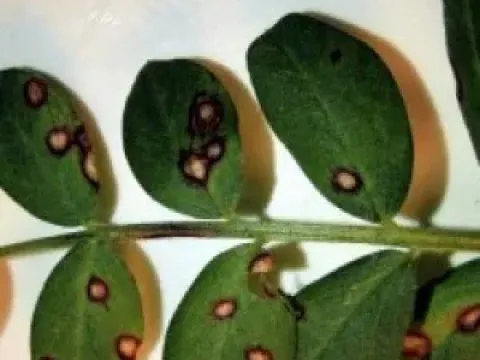
The primary symptom of Ascochyta blight is the appearance of characteristic spots on leaves, stems, and pods. These spots are often circular or irregular with a light center and dark brown margins.
What the section contains
Ascochyta blight
Small black dots, known as pycnidia, form in the center of these lesions. These are the fruiting bodies of the fungus and are a definitive sign of the disease when observed closely.
Infections on stems often lead to sunken lesions or cankers, which can girdle the stems, resulting in lodging and the wilting of the upper parts of the plant.
In legumes, the disease frequently affects the seeds, causing dark, sunken pits. This significantly degrades the seed quality and reduces overall yield viability.
Severe infestations cause premature leaf shedding and flower drop, which drastically reduces the photosynthetic surface area and the plant's potential for fruit development.
The disease is caused by various species of fungi within the genus Ascochyta. These pathogens produce pycnidia, which serve as reservoirs for asexual spores called conidia.
These fungi are highly host-specific, meaning that different species target specific crop groups, such as peas, beans, or chickpeas, showing specialized parasitic behavior.
The fungus survives the off-season as mycelium and pycnidia on infected crop debris, in the soil, and within or on the surface of harvested seeds.
Ascochyta spores can remain viable for several years in the soil or in infected plant tissue, ensuring a persistent threat in agricultural fields with poor rotation practices.
The spread of the disease during the growing season is facilitated by rain splashes, wind, and mechanical movement, allowing the infection to jump between neighboring plants.
High humidity levels and mild temperatures are the primary environmental drivers for the development and spread of Ascochyta blight in field conditions.
Frequent rainfall, fog, and prolonged dew periods provide the necessary moisture for the germination of conidia and their subsequent penetration into plant tissues.
Optimal growth temperatures for the pathogen range from +20°C to +25°C, though the fungus can remain active at lower temperatures if moisture persists.
Densely planted crops create a microclimate with stagnant air and elevated humidity, which significantly accelerates the rate of infection across the field.
Weedy fields act as alternative hosts, maintaining the pathogen population even in the absence of primary crops and increasing the risk of early-season outbreaks.
Ascochyta blight is economically devastating as it directly attacks both vegetative and reproductive plant parts, leading to massive yield losses.
Infected seeds show reduced germination energy and poor vigor, leading to thin stands and the necessity of re-seeding, which incurs additional costs.
Plants weakened by the fungus are more susceptible to secondary stressors, including other pathogens and adverse weather conditions, further reducing crop output.
The quality of the harvest is severely compromised due to surface lesions and internal damage, rendering the product unsuitable for high-value markets or storage.
In years with prolonged wet weather, the disease can reach epidemic proportions, causing near-total loss of the affected crop in unprotected fields.
The most important control strategy is the use of certified, disease-free seed and treating seeds with appropriate fungicides before planting.
Crop rotation with non-host plants for at least three to four years is essential to reduce the pathogen load in the soil and break the disease cycle.
- Deep tillage to bury crop residues and prevent spore dispersal.
- Planting resistant or tolerant cultivars suitable for the region.
- Applying systemic fungicides at the first sign of symptoms.
- Rigorous weed control to remove alternative reservoirs of the fungus.
- Ensuring proper plant spacing to improve air circulation and reduce humidity.
Integrated pest management, including regular field monitoring and the use of resistant varieties, is the most effective approach to managing Ascochyta blight.
Timely application of protective fungicides during sensitive crop stages is crucial for minimizing losses in regions with high disease pressure.