
Arthopyreniaceae
Arthopyreniaceae
Arthopyreniaceae is a family of fungi that are primarily known as lichenized or lichenicolous organisms living on the bark of various trees and shrubs.
What the section contains
Arthopyreniaceae
These organisms consist of a fungal partner and an algal component, creating a symbiotic structure that attaches to the tree surface without acting as a primary pathogen.
In agricultural practice, they are often considered epiphytes rather than disease-causing agents, though their presence is frequently linked to tree physiological stress.
The reproduction cycle relies on spore dispersal by wind or water droplets, which land on suitable bark textures and begin colony development under favourable conditions.
While they do not actively consume the tree's sap, they are adapted to thrive on the specific organic matter and moisture found on the surface of woody plant tissues.
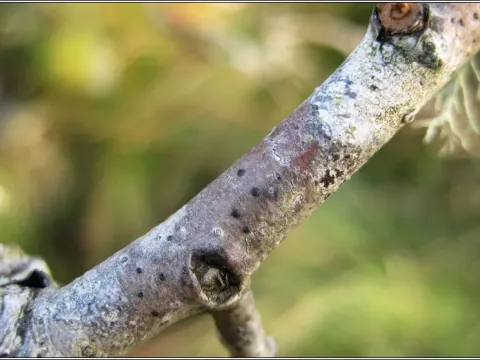
Symptoms appear as small, often dark-colored spots or crust-like patches on the tree trunk and branches, frequently making the bark look rough or speckled.
Tiny black fruiting bodies, known as perithecia, are visible to the naked eye as small dots embedded within the lichen layer, providing a distinct texture to the bark surface.
Unlike transient dirt, these growths are firmly anchored and remain persistent even during dry weather, creating a permanent visual alteration of the bark.
In moist environments, the affected areas may appear darker and slightly softer, as the lichen layer absorbs and retains significant amounts of water.
The spreading pattern is usually gradual, starting from the base of the tree and potentially moving upward toward the branches as the colony matures.
Arthopyreniaceae thrive in environments characterized by high ambient humidity and poor air circulation, often found in dense, unpruned orchard canopies.
Shaded locations are particularly conducive to growth, as the lack of direct sunlight prevents rapid drying of the bark surface after precipitation.
Older trees with rough, fissured bark provide ideal niches for spore attachment and colonization, as these textures trap moisture and nutrients.
Orchards located near large water bodies or in low-lying areas with stagnant air are at a higher risk of heavy lichen colonization due to constant moisture availability.
Poor horticultural practices, including long-term neglect of sanitation, significantly contribute to the rapid expansion of these epiphytic organisms.
The primary concern is the mechanical interference with the bark's gas exchange, which can slightly impede the plant's respiratory processes in severely affected areas.
These lichens often act as a secondary habitat for orchard pests, such as scale insects and mites, which utilize the thick lichen layer as shelter from predators.
While not lethal, a heavy presence of lichens often indicates that the tree is already experiencing reduced vigor or unfavorable growing conditions.
The moisture retention properties of the lichen layer can foster the development of opportunistic fungal infections if the bark has existing wounds or cracks.
Aesthetically, a heavily covered tree suggests poor management and can decrease the overall health vitality of the ornamental or fruit-bearing plant.
Mechanical removal using stiff brushes or specialized scrapers during the dormant season is the most direct and effective way to clean the tree bark.
Whitewashing the trunks with a lime-based mixture containing copper-based fungicides provides a protective barrier and helps destroy dormant spores.
Pruning to increase airflow and light penetration is essential, as it dries out the bark surface and makes it uninhabitable for lichen growth.
Applying iron sulfate treatments during the dormant period is a proven method for successfully clearing extensive lichen colonies from the bark.
- Regular inspection of bark health during routine maintenance.
- Balanced fertilization to maintain robust tree vitality and bark elasticity.
- Avoiding excessive canopy density to promote rapid drying after rainfall.