
Arthrinium
Arthrinium
The disease is caused by fungi of the genus Arthrinium (most notably Arthrinium arundinis), which are members of the Ascomycota phylum. These fungi function as hemibiotrophs, capable of thriving on dead organic matter while also parasitizing living plant tissues.
What the section contains
Arthrinium
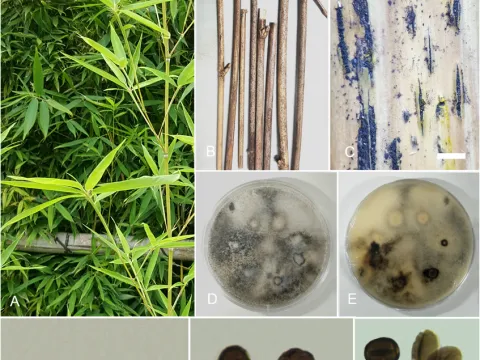
The fungus produces distinctive dark, cushion-like sporodochia that appear as black spots or streaks on host plants. These structures serve as survival units, allowing the pathogen to persist in soil, crop residues, and stubble for several seasons.
The life cycle of the pathogen is highly opportunistic, allowing it to adapt to various hosts in different agroecosystems. By utilizing plant debris as a reservoir, the fungus maintains a consistent inoculum pressure throughout the year.
Spore dispersal occurs primarily via wind currents and rain splashes. Once the conidia land on susceptible plant surfaces, they germinate and enter the tissue through stomata or mechanical injuries, initiating the infection process.
In recent years, the role of Arthrinium in plant health has gained attention. It is increasingly recognized as a component of complex disease syndromes that contribute to premature wilting and reduced quality of grain crops globally.
The primary symptom involves the appearance of tiny, coal-like black dots or linear streaks on leaves, stems, and glumes. In many cases, these spots are surrounded by chlorotic or necrotic tissue, indicating a localized stress reaction by the plant.
When the pathogen infects the ear or spike, it causes premature browning and drying of the spikelets. Under high humidity, a delicate white or grayish mycelial growth may be visible on the infected parts, which eventually darkens as spores develop.
Stem infections typically disrupt the vascular flow, leading to stunted growth and increased fragility. As the disease progresses, the structural integrity of the plant declines, making it susceptible to lodging and further damage.
Pathogen colonization is most common at the nodes and leaf sheaths where moisture tends to accumulate. This localized environment provides the necessary microclimate for the fungus to multiply and produce a new generation of spores.
In the field, infected patches often display a "premature ripening" effect. These areas appear dry and discolored while the surrounding healthy plants remain green and physiologically active, creating a clear visual contrast across the canopy.
Arthrinium development is favored by high relative humidity (above 75%) and moderate temperatures, typically between 18°C and 24°C. Prolonged wet weather is the most critical environmental factor triggering rapid disease spread.
Plants under physiological stress are significantly more vulnerable. Factors such as nutrient deficiencies, improper irrigation, or pest infestations weaken the plant's natural defenses, allowing the fungus to penetrate and colonize tissues more effectively.
Dense planting patterns promote the disease by reducing airflow within the canopy. Stagnant air and persistent moisture around the base of the plants create an ideal breeding ground for the pathogen to thrive and propagate.
Inadequate crop residue management is a major driver of the disease cycle. Surface stubble left in fields serves as a primary source of inoculum, ensuring that the pathogen remains present for the next planting season.
The most critical window for infection is during the flowering and grain-filling stages. During these phases, the pathogen can penetrate the head, directly impacting the final grain yield and the overall quality of the harvest.
The harm caused by Arthrinium stems from the reduction of the functional leaf area. By limiting photosynthesis, the disease impairs the plant's ability to produce sufficient grain biomass, leading to smaller, lighter, and lower-quality seeds.
Grain harvested from heavily infected plants often lacks uniformity and has reduced test weight. These quality issues diminish the market value of the crop and may make it unsuitable for high-quality food or seed production.
Fungal metabolites produced during the infection process can interfere with plant metabolism. These toxins, combined with secondary bacterial infections, often exacerbate the overall damage to the crop.
Economic losses are compounded by the increased cost of fungicide applications and the need for post-harvest grain cleaning. If left unmanaged, the disease can lead to significant yield reductions, ranging from 15% to 25% in severe cases.
Ignoring early signs of infection can lead to an epiphytotic spread of the disease. Once the pathogen is established in a field, the management effort required to prevent long-term damage increases substantially.
Strict crop rotation is the cornerstone of disease prevention. Avoiding the planting of susceptible crops in the same field for several consecutive years helps break the pathogen's life cycle and reduces the soil-borne inoculum.
Deep plowing and proper residue management are essential for controlling the disease. Burying crop stubble promotes decomposition, which significantly limits the pathogen's ability to survive between growing seasons.
The use of tolerant or resistant varieties is the most effective long-term strategy. Additionally, using certified, high-quality seeds treated with systemic fungicides provides an early protective barrier against potential infection.
Fungicide applications during the flag leaf stage and the beginning of heading are crucial for protecting the crop. It is important to choose products with broad-spectrum activity to address potential fungal complexes.
- Maintaining optimal planting density to improve airflow.
- Balanced fertilization, avoiding excessive nitrogen that makes plants succulent.
- Regular monitoring of fields for early detection of fungal symptoms.
- Weed management to eliminate alternative host reservoirs.