
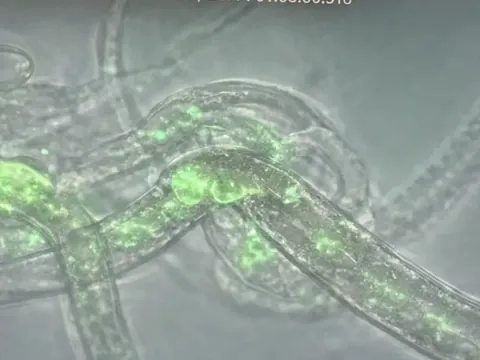
Arthrobotrys irregularis
Arthrobotrys irregularis
Arthrobotrys irregularis is a micro-fungus classified as a predatory hyphomycete. In modern agriculture, it is not considered a plant disease agent but rather a beneficial organism used for biocontrol.
What the section contains
Arthrobotrys irregularis
The fungus is renowned for its ability to capture and consume plant-parasitic nematodes, which are major threats to crop yield globally. It functions as a natural defender of the plant root system.
The mechanism of action involves the development of complex 3D hyphal traps. Once a nematode contacts these loops, the fungus rapidly adheres to the pest and secretes enzymes to digest its internal tissues.
Its biological cycle is intricately linked to the availability of its prey, making it a self-regulating component of the soil ecosystem. It thrives particularly well in the rhizosphere of plants.
Research confirms that A. irregularis produces specialized secondary metabolites that assist in immobilizing pests, providing a clean and efficient alternative to synthetic nematicides.
The optimal development of Arthrobotrys irregularis requires stable soil moisture and moderate temperatures, typically ranging from 15°C to 25°C.
Soil aeration is essential for the growth of the fungal mycelium. Compacted or waterlogged soils inhibit the formation of the complex hyphal structures required for hunting.
Organic matter content significantly influences the population density of the fungus. Soils rich in organic residue provide a steady supply of nutrients, sustaining the fungus during periods of low pest activity.
The fungus is highly responsive to the presence of plant root exudates. These natural signals help the fungus locate the root zone where nematode concentrations are often highest.
Avoidance of broad-spectrum chemical fungicides is necessary to maintain a healthy population of this beneficial fungus, as such chemicals can disrupt the natural soil microbial balance.
Arthrobotrys irregularis does not cause any harm to agricultural crops. It is completely safe for vegetables, fruits, and grain crops, as it possesses no phytotoxic properties.
The only concern regarding its presence is visual identification. Growers may mistake the fungal mycelium for pathogenic mold, leading to unnecessary and costly applications of chemical control agents.
The fungus does not compromise plant health, structural integrity, or product quality. On the contrary, by mitigating nematode damage, it contributes to better plant vigor and increased yields.
It poses no risk to human health or animals, making it an ideal candidate for integrated pest management (IPM) systems in both large-scale farming and home gardening.
Its role is exclusively restorative. It helps reclaim degraded soils by reducing the parasitic load that would otherwise lead to systemic plant infections and root rot.
Management of Arthrobotrys irregularis focuses on its implementation through bio-inoculants. These products are applied directly to the soil to ensure immediate colonization.
Crop rotation practices that emphasize organic soil amendments are the best way to encourage indigenous populations of the fungus to grow and remain active.
Integrated pest management strategies should prioritize the use of A. irregularis over toxic nematicides to preserve soil biodiversity and long-term sustainability.
Precision application of bio-preparations during the planting phase provides the fungus with a head start, ensuring it is well-established before the peak emergence of parasitic nematodes.
Continuous monitoring of soil health is recommended to optimize the timing and dosage of bio-control agents, ensuring the effectiveness of this natural defense mechanism.