
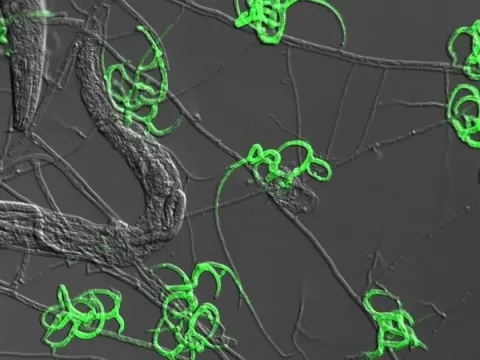
Arthrobotrys robusta
Arthrobotrys robusta
Arthrobotrys robusta is a well-known species of nematophagous or predatory fungi that does not cause disease in plants, but rather acts as a natural biological control agent.
What the section contains
Arthrobotrys robusta
These fungi are characterized by their unique ability to develop adhesive networks or traps that capture and consume soil-dwelling nematodes.
As a saprotrophic organism, it survives on organic debris in the soil, effectively turning into a predator when the population of its prey becomes available.
The fungus is widely distributed in temperate and tropical soils, playing a crucial role in maintaining the balance of soil microbiota.
Modern agronomy identifies Arthrobotrys robusta as a promising biological tool for sustainable pest management in greenhouse and open-field agriculture.
The fungus thrives in soils with moderate moisture and high organic matter content, which provide the necessary nutrients for initial mycelial colonization.
The ideal temperature range for its metabolic activity and the production of trapping structures is between 20°C and 25°C.
Soil aeration and a stable pH level are critical factors that influence the survival rate and the efficacy of the fungus against nematode populations.
Environmental stress, such as excessive use of chemical fungicides, can drastically reduce the presence of this beneficial fungus in the rhizosphere.
Adopting conservation tillage practices supports the natural infrastructure of the soil, allowing Arthrobotrys robusta to perform its ecological role effectively.
Arthrobotrys robusta is completely non-pathogenic to crops, meaning it does not cause any form of damage to root systems or plant tissues.
Its presence is beneficial because it actively suppresses populations of harmful nematodes that would otherwise cause significant yield losses.
There are no recorded instances where this species has negatively impacted agricultural production or plant health.
By protecting crops from root-knot and other parasitic nematodes, it contributes to better plant vigor and nutrient uptake efficiency.
Utilizing this fungus as a bio-control agent offers a sustainable alternative to chemical nematocides that often have adverse environmental impacts.
No control measures are necessary, as Arthrobotrys robusta is a beneficial organism that supports ecosystem stability.
Agricultural managers should focus on promoting its growth by minimizing the use of synthetic fungicides and maintaining high levels of soil organic matter.
Incorporating compost and green manures into the field can stimulate the activity and population density of this predatory fungus.
Regular monitoring of soil health can help assess the effectiveness of natural bio-control agents in suppressing pest populations.
Integrating these fungi into holistic crop management systems is recommended for long-term soil health improvement and pest reduction.