
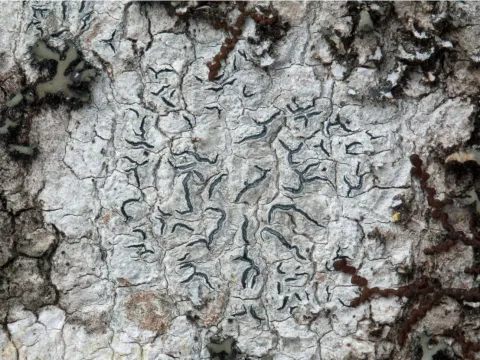
Arthonia radiata
Arthonia radiata
Arthonia radiata is an epiphytic lichen that colonizes the smooth bark of various deciduous trees. It is characterized by flat, dark, and irregularly shaped patches with a distinct radiating or starlike pattern.
What the section contains
Arthonia radiata
The primary diagnostic sign is the presence of apothecia, which appear as tiny, black, branched, or wavy lines embedded within the bark surface. These structures often possess a thin whitish margin.
On early stages of growth, these colonies are subtle and can easily blend with the color of the host's bark, but they become more prominent as the colony expands.
The lichen is typically crustose, meaning it adheres tightly to the substrate and does not peel off, forming an integral part of the tree's outer layer.
The intricate pattern of the apothecia is the most reliable feature for identifying this specific species compared to other crustose lichens.
The organism is an ascomycete fungus that forms a symbiotic relationship with algae, resulting in a lichenized structure. It lives as an epiphyte and does not penetrate into the living tissues of the host.
Reproduction is primarily achieved through spores produced in the apothecia. These spores are dispersed by wind or rain droplets, allowing the lichen to colonize adjacent suitable surfaces.
It survives through a biological state of dormancy during harsh conditions, such as extreme dryness or cold, resuming growth when moisture levels increase.
The species serves as a biological indicator; its presence often suggests a relatively healthy and clean air environment, as it is sensitive to high levels of industrial pollutants.
Growth is generally slow, as the lichen relies on photosynthesis from its algal component and captured atmospheric nutrients, exerting minimal metabolic stress on the host.
Arthonia radiata thrives in environments with high humidity, such as shaded woodlands, park interiors, and valleys where moisture levels remain consistently stable.
It shows a strong preference for trees with smooth or thin bark, including species like hornbeam, beech, hazel, and rowan. It is rarely found on rough or coniferous bark.
Optimal growth occurs in moderate temperature regimes, typical of temperate climates, during the active spring and autumn seasons when moisture is abundant.
Good lighting is beneficial, but the lichen typically avoids direct, intense sunlight, preferring the diffused light found within the lower canopy of forests.
Air quality is a critical factor for distribution; the species is sensitive to atmospheric sulfur dioxide, which inhibits the development of the lichenized thallus.
While not a primary pathogen that kills trees, Arthonia radiata can negatively affect the physiology of the bark by covering lenticels, which are essential for gaseous exchange.
Dense colonies create a favorable micro-habitat for secondary pests, such as scale insects and mites, which find refuge and protection under the lichen's crust.
Furthermore, the moisture-retaining capacity of the lichen can encourage the growth of other, more detrimental fungal pathogens that can lead to bark decay.
The presence of significant lichen coverage on fruit trees often indicates a lack of vigor or poor aeration within the crown, suggesting the tree needs improved care.
Aesthetically, large colonies on ornamental trees can result in a prematurely aged or neglected appearance, which is undesirable in managed garden settings.
Routine maintenance of tree crowns through pruning is the most effective way to improve airflow and reduce the humidity levels that favor lichen colonization.
Mechanical removal using stiff brushes during the dormant season is a safe method to clean the bark of fruit trees without harming the underlying tissues.
Applying a lime wash or a copper-based solution to the trunks is a traditional and effective method to eradicate lichen colonies and disinfect the bark surface.
Promoting tree vitality through proper fertilization and watering helps the bark remain healthy, often leading to natural shedding or expansion that inhibits lichen growth.
In cases of heavy infestation, specific copper-based fungicides can be applied to suppress lichen growth while simultaneously providing protection against common fungal diseases.