
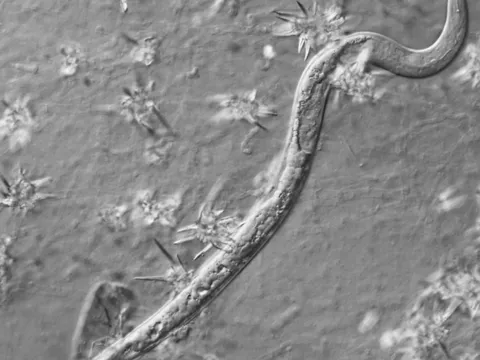
Arthrobotrys dactyloides
Arthrobotrys dactyloides
Arthrobotrys dactyloides is a specialized species of predatory fungus known for its role in controlling nematode populations. Unlike plant pathogens, this organism serves as a vital biological tool in agricultural ecosystems.
What the section contains
Arthrobotrys dactyloides
The fungus functions as a nematophagous micro-organism, existing primarily as a soil saprophyte. However, in response to nutrient scarcity and the presence of prey, it develops specialized predatory mechanisms.
The biological hallmark of this species is its ability to produce constricting rings. These intricate loops are formed on the hyphal network and act as highly sensitive traps for soil-dwelling nematodes.
When a nematode enters one of these rings, the loop contracts rapidly, effectively trapping the prey. This mechanism allows the fungus to hold the nematode firmly while it penetrates the cuticle.
Once trapped, the fungus invades the body of the nematode using specialized hyphae and releases enzymes that digest the victim, thereby reducing the nematode population in the rhizosphere.
Optimal development of Arthrobotrys dactyloides is heavily dependent on soil moisture levels. Consistent humidity is required to sustain the growth of the fungal mycelium and the formation of traps.
The fungus thrives in moderate temperature ranges, typically between 15°C and 25°C. Excessive heat or prolonged soil desiccation can significantly limit its predatory activity.
The presence of organic matter is crucial for the survival of the fungus when nematode prey is scarce. High-quality soil organic content supports a robust fungal population that is ready to act when needed.
Soil pH plays a significant role in the effectiveness of this organism. Neutral or slightly acidic soil environments are generally the most conducive for colonization and trap formation.
Root exudates from plants also act as biochemical stimulants. These substances signal the presence of host nematodes, prompting the fungus to increase trap production in the plant's root zone.
It is critical to classify Arthrobotrys dactyloides correctly: it is not a plant pathogen, but a beneficial biological control agent. It poses no threat to the health or yield of agricultural crops.
The "harm" caused by this fungus is restricted entirely to plant-parasitic nematodes. By regulating these pests, the fungus prevents significant damage to the root systems of vegetables, grains, and fruit crops.
In fields where this fungus is absent due to intensive chemical use, nematode populations can reach epidemic levels. Thus, the presence of the fungus is a sign of a healthy, balanced agricultural soil.
The fungus does not form toxic residues or cause wilting. It works silently beneath the soil surface to maintain the biological integrity of the growing environment.
Modern agronomy increasingly views the protection of such fungi as a key strategy for reducing the reliance on synthetic nematicides, which can be damaging to the soil environment.
Protecting Arthrobotrys dactyloides involves fostering a fertile and biologically diverse soil environment. The primary goal is to minimize the use of broad-spectrum fungicides that could harm these beneficial organisms.
Integrating organic farming practices ensures that there is enough food source for the fungi to survive in off-seasons. This maintains a persistent population ready to combat pest outbreaks.
- Apply organic amendments such as compost or manure.
- Avoid over-reliance on chemical nematicides and fungicides.
- Utilize cover crops to maintain soil health and root density.
- Practice reduced tillage to preserve the fungal hyphal network.
- Monitor soil health through biological analysis rather than just chemical tests.
By focusing on soil health, farmers can naturally leverage the predatory behavior of this fungus to provide long-term protection against nematode damage.
In cases of severe infestation, bio-inoculants containing beneficial fungi can be introduced to augment the existing natural population of Arthrobotrys dactyloides.