
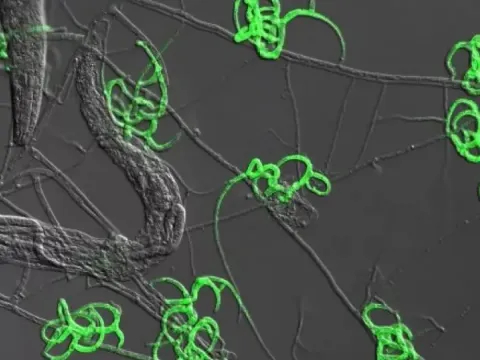
Arthrobotrys
Arthrobotrys
Arthrobotrys is not a plant pathogen; instead, it is a genus of soil-dwelling predatory fungi belonging to the Ascomycota division. These fungi are known as nematophagous organisms, meaning they actively hunt and consume microscopic roundworms.
What the section contains
Arthrobotrys
The biological uniqueness of this genus lies in the formation of specialized trapping structures on their mycelium. Depending on the species and environmental conditions, they develop adhesive networks, loops, or rings that serve as traps for soil organisms.
These fungi typically lead a saprotrophic lifestyle, thriving in organic-rich soils, but they switch to active predation when nitrogen sources are scarce. Upon contact with a nematode, the trap triggers rapidly, securing the prey.
Following capture, the fungus penetrates the nematode's body using hyphae, secreting enzymes that dissolve the cuticle. This process allows the fungus to absorb essential nutrients directly from the host.
In agronomy, Arthrobotrys is recognized as a natural biological control agent capable of reducing populations of phytopathogenic nematodes that damage the root systems of various crops.
Arthrobotrys fungi thrive in soils with adequate moisture and moderate temperatures. The optimal range for trap formation is between 20 and 28 degrees Celsius.
The presence of organic matter is critical for the efficacy of the fungus. Incorporating compost, manure, or cover crops encourages the proliferation of these predatory fungi and enhances their protective function.
Soil pH also affects nematophagous activity, with most species preferring neutral to slightly acidic environments. Excessive use of chemical fungicides can suppress the beneficial biological activity of these fungi.
The fungus spreads via spores (conidia) and mycelial fragments, which are transported through soil particles, irrigation water, or farm machinery.
Agricultural practices that focus on improving soil fertility and structure create a favorable ecological niche for these beneficial fungi to dominate the rhizosphere.
Unlike phytopathogens, Arthrobotrys does not cause plant disease. On the contrary, its presence is highly beneficial as it suppresses nematode populations—harmful pests that cause root-knot diseases and general plant decline.
The unique predatory ability of these fungi ensures they target harmful nematodes without damaging beneficial soil microflora or sensitive root hairs, making them an excellent tool for organic farming.
If these fungi are absent from the soil, pathogenic nematodes can proliferate uncontrollably, leading to significant yield losses in vegetables, berries, and ornamental plants.
There is no "harm" associated with this fungus; rather, its low activity in the soil profile acts as a vulnerability factor for crops prone to nematode infestations.
Crops that benefit significantly from Arthrobotrys biocontrol include:
- potatoes and tomatoes (root-knot nematodes);
- cucumbers and other cucurbits;
- strawberries;
- greenhouse ornamental plants.
Control strategies for Arthrobotrys focus on maintaining and boosting its population in the soil. Applying bio-products containing spores of these fungi allows for successful introduction before planting sensitive crops.
Preventive agricultural management includes crop rotation, as monoculture depletes soil microbial diversity. It is essential to minimize the use of harsh chemicals that can disrupt the natural balance of predatory fungi.
Growing cover crops like mustard or phacelia helps enrich the soil with organic material, which provides a food base and stimulates the predatory activity of Arthrobotrys.
To preserve the effectiveness of biological control, maintaining optimal soil moisture is crucial, as both extreme drought and waterlogging can inhibit fungal development.
Integrated plant protection systems utilizing predatory fungi offer a sustainable approach to reducing reliance on costly and toxic nematicides.