
Alternaria blight of onion
Alternaria undulata
The causal agent of this disease is the fungus Alternaria undulata. It is a persistent pathogen capable of surviving in soil debris and on infested plant tissues for extended periods.
What the section contains
Alternaria blight of onion
The fungus produces conidia that are easily dispersed by wind and splashing rain. Upon landing on host tissue, the spores germinate and penetrate the epidermal layer, establishing an infection within the plant.
This pathogen shows a high level of host specificity for Allium species. It secretes phytotoxins that degrade plant cell walls, leading to tissue chlorosis and necrosis, which weakens the overall health of the onion bulb.
Alternaria undulata can persist as dormant chlamydospores in the soil. This structural adaptation allows it to withstand harsh environmental conditions, making it a recurring threat in agricultural systems.
The fungus exhibits a fast growth rate during optimal environmental conditions. It colonizes the leaves effectively, utilizing nutrients from the host and hindering the photosynthesis process of the entire crop.
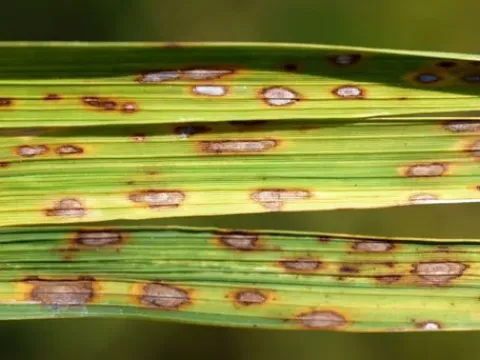
Early symptoms appear as small, water-soaked spots on the leaves. As the disease progresses, these spots expand into elongated lesions, often showing a distinct yellowish halo around the edges.
A hallmark of this disease is the appearance of concentric, target-like rings within the lesions. In humid conditions, these spots are covered with a velvety, olive-to-black fungal growth.
Infected leaves gradually turn yellow and dry out, starting from the tip and moving downwards. The weakened foliage often collapses at the site of infection, significantly reducing the vigor of the plant.
On the bulbs, symptoms may include sunken, necrotic patches that serve as entry points for secondary pathogens. This is particularly destructive during the curing and storage phases of the harvest.
A cross-section of an infected bulb often reveals tissue discoloration and softening. In severe cases, the internal scales turn brown, leading to a complete breakdown of the bulb structure and secondary bacterial soft rot.
The development of Alternaria undulata is favored by warm temperatures, typically between 20°C and 25°C. High relative humidity and prolonged leaf wetness are critical factors for mass sporulation.
Fields with poor drainage or high plant density are at increased risk. The lack of proper airflow prevents the canopy from drying quickly, which allows spores to germinate and infect tissues efficiently.
Plants under nutrient stress or those weakened by other pests are more susceptible to infection. An excessive amount of nitrogen can lead to lush, soft growth that is more vulnerable to the fungus.
Frequent rain events combined with periods of heavy dew create a persistent moist environment on leaf surfaces. These climatic conditions provide the necessary moisture for the rapid spread of the disease.
Improper storage conditions, such as high humidity and insufficient ventilation, facilitate the spread of the pathogen among healthy bulbs. This leads to substantial post-harvest losses if not managed correctly.
The primary damage caused by Alternaria blight is a significant reduction in photosynthetic capacity. This leads to stunted bulb growth, reduced harvest yield, and lower overall crop quality.
The disease significantly impacts the shelf life of onions. Infected produce is highly susceptible to secondary rots, making it unfit for long-term storage or high-quality market requirements.
If the infection occurs during the seed production stage, the yield of viable seeds can be severely compromised. Contaminated seeds can also act as a vector, spreading the disease to new planting areas.
In humid seasons, the epidemic spread of the disease can result in devastating losses, potentially destroying over half of the crop if no protective measures are taken by the farmers.
The presence of Alternaria toxins in the infected produce can pose safety concerns, restricting the usage of the harvest and increasing economic losses for commercial growers.
Effective control relies on integrated management strategies. Crop rotation is essential to prevent the buildup of Alternaria undulata inoculum in the soil over consecutive seasons.
Chemical control involving systemic fungicides is necessary in areas where the disease is prevalent. Timely applications, guided by weather monitoring, are crucial for keeping the infection under control.
Cultural practices such as removing crop debris after harvest and ensuring proper plant spacing are vital. These actions help to disrupt the disease cycle and create a less favorable environment for the fungus.
- Use of certified, disease-free seed and high-quality sets.
- Application of protective fungicides during humid weather.
- Maintaining optimal irrigation to avoid excessive leaf wetness.
- Proper post-harvest drying and storage in well-ventilated facilities.