
Alternaria blight of flax
Alternaria linicola
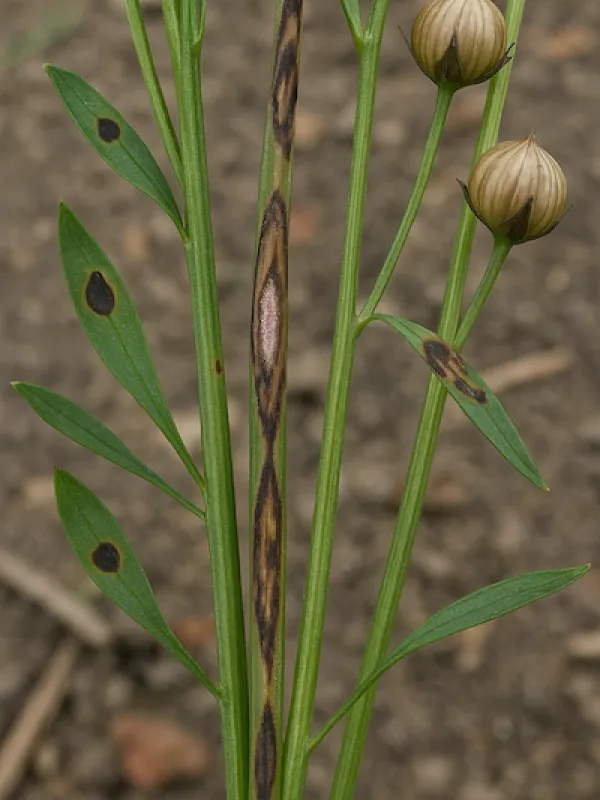
Description
Symptoms
Initial symptoms are often observed on young seedlings, appearing as dark brown spots on the cotyledons, which can lead to seedling blight and damping-off.
On adult plants, the characteristic symptoms include the development of elongated, brown lesions on the stems, often showing a concentric zonation pattern.
Under conditions of high humidity, these lesions are covered with a velvety, olive-black sporulation of the fungus, which serves as a source for further spread.
Infection of the seed bolls causes them to turn black prematurely, resulting in shriveled, deformed, and discolored seeds that have poor viability.
The weakening of stem integrity due to fungal colonization reduces the quality of the flax fiber, making it prone to breakage during harvesting and processing.
Pathogen
The causal agent of this disease is the fungus Alternaria linicola, which belongs to the Deuteromycetes group and acts as a serious threat to flax cultivation.
This pathogen is capable of surviving for several years in the soil as dormant mycelium or spores, attached to infected crop residues or buried organic matter.
Seed-borne infection is the primary route of transmission, as the fungus resides on the surface and within the internal tissues of the flax seeds.
During the growing season, the disease is disseminated by conidia transported by wind currents, splashing rain, or even through the activity of insects.
The biology of Alternaria linicola allows it to thrive in various climates, making it a persistent challenge for flax growers worldwide.
Conditions for development
Development of the disease is highly favored by warm temperatures ranging from 20°C to 25°C accompanied by frequent rainfall or high atmospheric humidity.
Prolonged wet periods during the flowering and seed-filling stages are particularly dangerous as they facilitate the infection of the reproductive structures.
Dense plant stands with poor air circulation create a microclimate that traps moisture, promoting the rapid germination of fungal spores on plant surfaces.
Excessive use of nitrogen fertilizers may cause lush but succulent vegetative growth, which is more susceptible to the penetration of the fungal mycelium.
Mechanical damage caused by pests or hail creates entry points for the pathogen, accelerating the infection process within the plant vascular system.
Why it matters
The economic impact of the disease is significant, as it leads to decreased plant population densities and lower overall flax yields.
The quality of fiber is drastically reduced, affecting its commercial value and suitability for high-end textile manufacturing purposes.
Seeds harvested from infected fields often have significantly reduced germination rates, making them unsuitable for subsequent replanting without treatment.
Extensive boll infection can lead to substantial quantitative losses, with potential yield reductions ranging from 15% to 40% in severe epidemic years.
The disease also predisposes the crop to secondary colonization by other pathogens, further complicating the health status of the flax field.
Protection
The most crucial step in management is the use of disease-free, certified seeds that have been properly tested for the presence of the pathogen.
Seed treatment with effective systemic or contact fungicides is essential to eliminate the initial inoculum before the crop emerges.
Adopting a sound crop rotation strategy—where flax is returned to the same plot only after 5 or more years—helps starve the fungus of its host.
Proper field management, including the removal of crop debris and effective weed control, reduces the potential sources of infection in the vicinity.
- Foliar fungicide applications during critical growth stages like budding.
- Selection of flax cultivars with documented resistance to Alternaria species.
- Optimizing sowing rates to ensure good canopy aeration and moisture control.
Discussion
No discussions yet — be the first.