
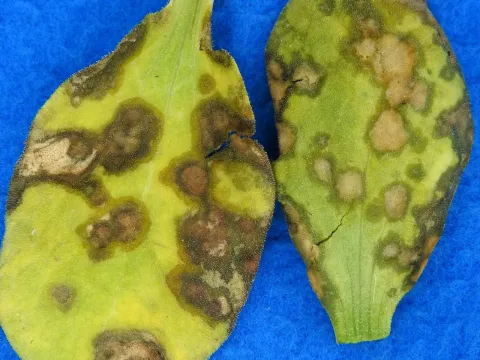
Alternaria leaf blight
Alternaria cucurbitae
The disease is caused by the pathogenic fungus Alternaria cucurbitae. This fungus is a common soil-borne pathogen that belongs to the group of deuteromycetes, characterized by its high resilience in diverse environments.
What the section contains
Alternaria leaf blight
It primarily affects members of the Cucurbitaceae family, including cucumbers, pumpkins, squashes, melons, and watermelons. The pathogen can attack plants at any growth stage, from seedlings to mature fruiting plants.
The fungus overwinters in infested plant debris in the soil or can be carried on contaminated seeds. This allows the disease to persist in a field for several years if not managed correctly.
Conidia (spores) are produced in abundance and are easily dispersed by wind, splashing rain, irrigation water, and even through human activity during routine field maintenance.
The pathogen is highly adaptable and can survive in a dormant state during adverse weather conditions, making it a persistent threat to commercial cucurbit production worldwide.
Initial symptoms appear on the oldest leaves at the base of the plant as small, circular or angular brown spots. As the infection progresses, these spots expand and often develop concentric rings.
Under conditions of high humidity, an olive-brown to black velvety growth of fungal spores becomes visible on the surface of the lesions, which is a definitive diagnostic feature of the disease.
As the infection spreads, the lesions coalesce, leading to severe chlorosis, necrosis, and premature death of the foliage. This causes significant thinning of the plant canopy.
Stems and leaf petioles can also be infected, showing elongated brown lesions that may result in stem girdling, causing the entire vine to wilt or collapse.
On the fruit, the disease manifests as small, sunken, circular lesions that may eventually darken. These spots provide entry points for secondary pathogens, leading to fruit decay.
The development of Alternaria leaf blight is strongly favored by warm temperatures, typically ranging from 20°C to 28°C, combined with high relative humidity.
Frequent rainfall, heavy dew, and high-humidity periods are critical factors that promote spore germination and subsequent infection of the plant tissues.
In greenhouse settings, poor ventilation and dense planting patterns create microclimates with stagnant, humid air, which significantly accelerates the spread of the fungus.
Plants under physiological stress, due to nutrient imbalances, waterlogging, or mechanical injury, are significantly more susceptible to colonization by the fungus.
Poor sanitation practices in the field, such as leaving infected plant material behind, create an ideal environment for the buildup of fungal inoculum for the following season.
The primary economic impact of the disease is the reduction of functional leaf area, which severely limits the plant's photosynthetic capacity and hinders proper fruit development.
Severe infections lead to significant yield losses due to stunted fruit growth, poor fruit quality, and premature crop senescence, rendering the produce unmarketable.
The infection can destroy a crop rapidly, especially in rainy seasons, causing substantial financial losses for farmers who have invested in intensive cucurbit cultivation.
Secondary infections of fruit by other bacteria or fungi often follow Alternaria infestations, making the harvest highly perishable and unsuitable for long-term storage or transport.
In addition to immediate crop loss, the disease degrades the health of the soil in the affected area, necessitating long crop rotation periods to lower the pathogen population.
Effective management requires an integrated approach that combines cultural practices, biological control, and timely application of chemical fungicides.
- Practice crop rotation by avoiding cucurbits in the same field for at least 3–4 years.
- Remove and destroy all crop residues immediately after harvest to reduce the inoculum load.
- Use high-quality, certified, and fungicide-treated seeds to ensure a disease-free start.
- Optimize plant spacing to improve air circulation and reduce the duration of leaf wetness.
- Use biological control agents or resistant cultivars where available to suppress fungal growth.
Fungicide applications, including protective copper-based sprays or systemic fungicides, should be initiated at the first sign of symptoms according to manufacturer guidelines.
Avoid overhead irrigation, especially in the late afternoon, as this keeps the foliage wet for prolonged periods and creates perfect conditions for fungal infection.