
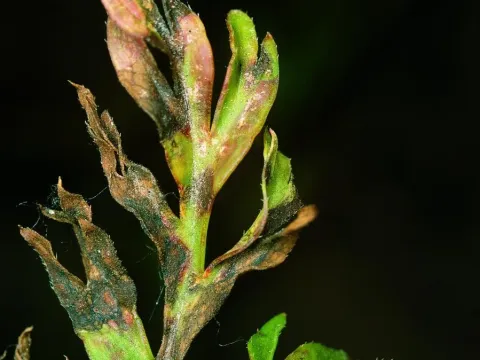
Alternaria leaf blight of carrot
Alternaria dauci
The disease is caused by the fungal pathogen Alternaria dauci, an ascomycete fungus that thrives in various environments. It is known for its ability to persist in the soil and on crop debris for several years.
What the section contains
Alternaria leaf blight of carrot
The pathogen spreads through airborne conidia, which are easily transported by wind or water splashes from rain and irrigation systems. Once they land on susceptible carrot foliage, they initiate an infection process.
The fungus is host-specific to the Apiaceae family, with carrots being the most significantly affected crop. Other related species such as parsley and parsnips can also serve as alternative hosts for the disease.
The infection cycle begins when spores germinate under moist conditions, and the hyphae penetrate the plant tissue. As the fungus colonizes the leaf tissue, it releases toxins that lead to cell death.
Understanding the biology of Alternaria dauci is crucial, as its resting structures, known as chlamydospores, allow it to survive extreme temperatures and harsh environmental conditions in the field.
Early symptoms appear as small, brown or black spots on the leaflets, often surrounded by a yellow halo. These initial lesions are frequently found on older, lower leaves first.
As the disease progresses, these spots expand rapidly, coalesce, and cause the leaves to curl, turn brown, and eventually wither completely, giving the crop a blighted appearance.
Under high humidity, a velvety, olive-to-black fungal growth can be observed on the surface of the lesions, which consists of masses of sporulating structures of the fungus.
The infection may spread to the petioles, causing them to become weak and brittle. This breakage makes harvesting difficult, as the carrot tops fail to hold the weight of the root during mechanical extraction.
In severe infestations, the blight can lead to the total collapse of the canopy, significantly reducing the plant's ability to produce energy through photosynthesis, leading to stunted root development.
The development of Alternaria leaf blight is heavily dependent on moisture. Prolonged leaf wetness, often caused by heavy dew, fog, or frequent rain, is the primary driver for disease spread.
The pathogen prefers warm temperatures, with the optimal range for spore germination and infection lying between 20°C and 25°C. Rapid cycles of infection occur when these conditions persist.
Poor field management, such as excessive plant density, restricts airflow and creates a stagnant, humid microclimate within the canopy, which greatly favors the rapid spread of the fungus.
Late-season crops are often at higher risk because they encounter the accumulation of inoculum in the field and longer periods of morning dew as autumn approaches.
Nutrient stress, particularly a lack of nitrogen, can make plants more susceptible to the disease, as they lack the vigor to maintain a robust defense against fungal colonization.
The economic impact of this disease is significant, primarily due to the loss of foliage, which translates directly into lower yields and smaller, less marketable carrot roots.
Blighted carrot tops are susceptible to breakage, which complicates mechanized harvesting and forces farmers to spend more on manual labor or lose unharvested crop in the soil.
Crop quality is also degraded, as stressed plants produce roots that are more prone to physiological disorders and secondary infections during storage, leading to higher waste levels.
Increased production costs are an inevitable consequence, as growers must invest in multiple fungicide applications to manage the disease and prevent it from reaching epidemic levels.
If not managed correctly, Alternaria leaf blight can lead to total harvest failure, especially in organic or poorly managed systems where chemical intervention is limited or absent.
Implementing a long-term crop rotation strategy, where carrots are not planted in the same field more than once every three to four years, is essential to reduce soilborne inoculum.
Using certified, high-quality seeds treated with appropriate fungicides is the first line of defense to prevent introducing the pathogen into the field at the start of the season.
Cultural practices, including deep plowing to bury infected debris and controlling wild relatives of carrots in the vicinity, are effective at lowering the overall disease pressure.
Applying preventative or systemic fungicides at the onset of early symptoms is a critical management practice, ensuring that the pathogen does not establish a firm hold on the crop.
- Maintain adequate plant spacing to facilitate air circulation.
- Prefer drip irrigation over overhead sprinkling to keep foliage dry.
- Provide balanced fertilization to maintain optimal plant health.