
Alternaria blight of cumin
Alternaria burnsii
Description
Symptoms
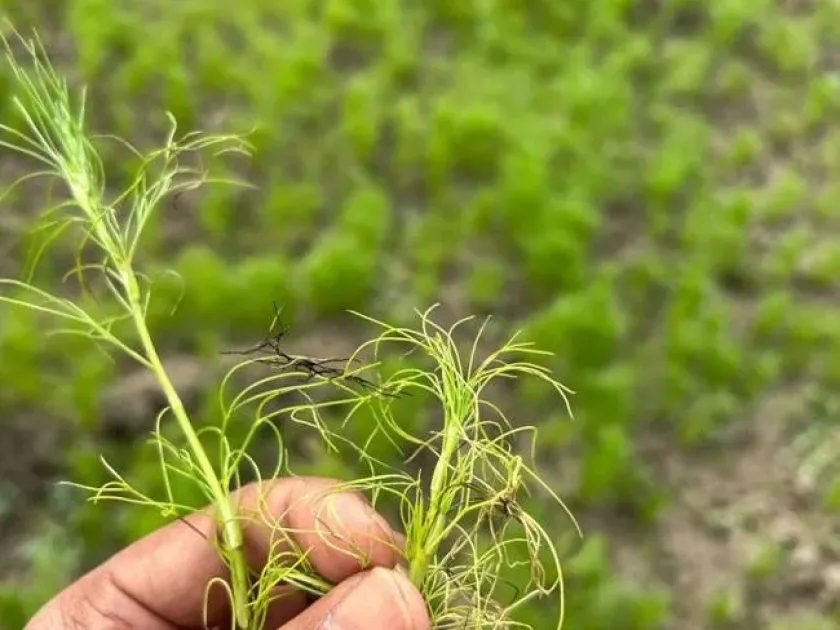
Early symptoms appear as small, irregular dark-brown spots on leaves and stems. These spots gradually enlarge and often develop concentric rings, a hallmark of Alternaria infections.
As the disease progresses, a dark olive-brown or black, velvety layer of conidiophores and spores becomes visible on the infected surfaces, particularly under humid conditions.
Severely affected plants exhibit yellowing and wilting. In advanced stages, the infected stems may break, and the entire plant may wither prematurely before reaching maturity.
The blight is particularly destructive when it affects the umbels. This leads to the shriveling of seeds, poor seed set, and significant discoloration, rendering the harvest unmarketable.
- Small necrotic lesions on foliage
- Dark fungal growth on stems and umbels
- Premature wilting and plant death
- Shriveled and discolored seeds
- Loss of crop yield and quality
Pathogen
The causative agent of the disease is the fungus Alternaria burnsii, which is a specialized pathogen affecting plants of the Apiaceae family. It is known as the primary cause of cumin blight.
The pathogen overwinters as mycelium and conidia on infected crop debris left in the soil after harvest. Additionally, the fungus can be seed-borne, representing a significant risk for new plantations.
During the growing season, the conidia are dispersed primarily by wind and splashing rain. This ensures rapid spread of the disease across the field under suitable environmental conditions.
Infection typically occurs through natural openings, such as stomata, or through wounds caused by insects or machinery. Once inside, the fungal hyphae colonize the plant tissues.
The life cycle of the pathogen is closely tied to climatic factors, and multiple generations of spores can be produced within a single season, leading to severe outbreaks.
Conditions for development
Alternaria burnsii thrives in warm and humid climates. The optimal temperature range for the development of the disease is between 25 and 30 degrees Celsius.
Frequent rainfall, heavy dew, and foggy weather significantly promote the germination of conidia and the rapid spread of the pathogen throughout the crop canopy.
Poor field ventilation, often caused by high planting density, creates a humid microclimate within the plant stand, which is highly conducive to fungal outbreaks.
Plants under nutritional stress or those suffering from insect damage are significantly more susceptible to infection compared to healthy, well-nourished plants.
The persistence of the fungus in the soil or on crop residues allows it to re-infect subsequent crops if rotation practices are neglected.
Why it matters
The primary economic harm of Alternaria blight is the substantial reduction in seed yield. The damage to flowers and developing seeds leads to poor harvest quantity.
The quality of the cumin is also compromised. The content of essential oils, which determines the market value of the crop, is significantly reduced in infected plants.
Contaminated seeds are unfit for planting, as they serve as a source of primary inoculum, which can lead to seedling blight and early establishment of the disease.
In favorable conditions for the fungus, losses can be devastating, sometimes exceeding 50% of the potential crop. Such severe outbreaks make production unprofitable.
The disease drains the vitality of the plant, preventing proper development and negatively impacting the overall health of the agricultural ecosystem in the field.
Protection
The most effective strategy starts with using certified, disease-free seed. Seed treatment with fungicides is essential to eliminate internal and surface-borne pathogens.
Strict crop rotation is necessary to prevent the accumulation of the fungus in the soil. A gap of several years between cumin crops is recommended.
Effective sanitation, including the destruction or deep burial of crop residues, helps to break the survival cycle of Alternaria burnsii during the winter period.
Foliar application of appropriate fungicides is crucial when weather conditions are favorable for disease development or upon the first signs of infection.
Maintaining balanced fertilization and optimal plant spacing ensures that the plants remain vigorous and less prone to severe fungal infestation throughout the season.
Discussion
No discussions yet — be the first.