
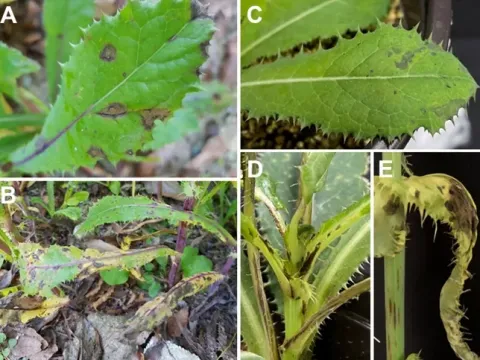
Alternaria leaf blight of sow thistle
Alternaria sonchi
The disease is caused by the fungus Alternaria sonchi, an asexual fungus belonging to the Alternaria genus. It is a specialized pathogen that predominantly targets plants within the Sonchus (sow thistle) genus.
What the section contains
Alternaria leaf blight of sow thistle
The fungus produces a septate mycelium that invades plant tissues. It releases enzymes and phytotoxins that break down cell walls and facilitate the colonization of the host plant tissues.
Reproduction occurs via conidia, which are produced on conidiophores. These spores are highly resistant to short-term environmental stress and are easily dispersed by wind and rain splash.
Scientific interest in Alternaria sonchi centers on its potential as a biological weed control agent. Its high host specificity makes it a candidate for developing safe, natural mycoherbicides.
The pathogen survives unfavorable periods as mycelium or spores on crop debris and decaying plant matter, ensuring its presence in the soil and environment for the next growth season.
Symptoms initially appear as small, chlorotic spots on the lower leaves. As the infection progresses, these spots expand, turning brown or dark reddish-brown.
A hallmark sign of the disease is the concentric zonation within the lesions. These alternating rings of light and dark tissue are a classic symptom characteristic of Alternaria species.
Under high humidity, a velvety, olive-black sporulation layer develops over the lesions. Infected leaves eventually become yellow, wither, and die prematurely.
Infection can also affect stems and flower stalks. It manifests as elongated necrotic streaks that may weaken the plant, causing it to lean or break under mechanical stress.
Severe infestations lead to a stunted appearance of the entire plant. The pathogen significantly reduces the sow thistle's vigor and its ability to compete with neighboring vegetation.
High relative humidity and the presence of free water on leaf surfaces are essential for infection. Dew, fog, or frequent rainfall are the primary drivers of disease development.
The optimal temperature range for spore germination and lesion development is between 18°C and 25°C. Rapid proliferation occurs when these conditions are sustained.
Densely populated weed patches create a favorable microclimate. Reduced air circulation within the canopy maintains high humidity, facilitating the spread of spores from plant to plant.
Wounds caused by insect feeding or agricultural maintenance activities provide entry points for the pathogen, accelerating the rate of tissue colonization.
The combination of warm temperatures and moisture is critical for epiphytotic spread, allowing the fungus to rapidly infect large populations of sow thistle.
The primary impact of the disease is the substantial reduction in the weed's photosynthetic capacity. By destroying leaf area, the fungus depletes the plant's energy reserves.
Infection disrupts the reproductive growth of the sow thistle, leading to decreased flower production and lower seed viability, thus reducing the weed's long-term reproductive potential.
By suppressing the weed's growth, the disease indirectly benefits the main crop by reducing competition for light, water, and essential soil nutrients.
The pathogen acts as a natural regulator of sow thistle populations in wild and agricultural ecosystems, helping maintain ecological balance.
Since the pathogen is highly specific to Sonchus, it presents no harmful risks to major agricultural crops, making it an ideal candidate for environmentally friendly weed management.
Control strategies involve the application of formulated Alternaria sonchi spores as a mycoherbicide. This targeted biological approach aims to suppress sow thistle infestations.
Successful application requires careful timing. Targeting late afternoon or periods of anticipated high humidity ensures better spore germination and infection rates.
Integrated management systems combine biocontrol with standard agricultural practices to improve overall field sanitation and reduce weed pressure.
Monitoring the pathogen's activity allows for precise application, minimizing the amount of biological agent needed while maximizing the suppression of the weed.
Using Alternaria sonchi as a management tool helps in reducing chemical reliance, supporting the shift toward sustainable and organic farming practices.