
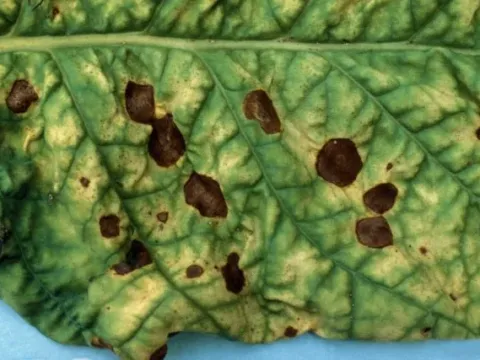
Alternaria leaf blight of cucurbits
Alternaria cucumerina
The disease is caused by the fungus Alternaria cucumerina. It is a highly persistent pathogen that survives in soil debris and is often transmitted through infected seeds, making it a recurring threat for growers.
What the section contains
Alternaria leaf blight of cucurbits
This pathogen affects a wide range of cucurbits, including watermelon, melon, cucumber, squash, and pumpkin. It can thrive in both field production and greenhouse environments, spreading rapidly if the conditions are favorable.
The fungus produces conidia that are disseminated by wind, splashing rain, or farm equipment. Upon contact with plant tissue, the spores germinate, and the mycelium begins to invade the leaves, stems, and sometimes the fruits.
Multiple cycles of spore production occur throughout the growing season. This rapid reproductive cycle allows the disease to spread quickly across entire fields, turning local infections into large-scale epidemics.
Due to its ability to remain dormant in soil for years, Alternaria cucumerina is considered a significant challenge in integrated pest management systems, requiring strict field hygiene protocols.
Initial symptoms of Alternaria leaf blight appear as small, circular, brown spots on the older, lower leaves. As the disease progresses, these spots expand and often display characteristic concentric rings.
Surrounding the necrotic lesions, yellowing (chlorosis) of the leaf tissue is common. Under high humidity, a dark, velvety layer of fungal spores may develop on the surface of the spots, distinguishing them from other leaf diseases.
The infection gradually moves from the lower foliage to the upper parts of the plant. In severe cases, the infected leaves wither, die, and fall off, causing extensive defoliation that exposes the fruits to sunscald.
Fruit symptoms typically appear as sunken, dark lesions that can penetrate deep into the tissue. These spots serve as entry points for secondary pathogens, often leading to rapid decay during storage and transit.
Early identification of these concentric patterns is crucial for distinguishing blight from other conditions like downy mildew or anthracnose, which may require different treatment approaches.
Alternaria leaf blight thrives in warm and humid conditions. Temperatures between 20°C and 28°C are optimal for spore germination and rapid fungal colonization of host tissues.
Free water on leaf surfaces is necessary for infection to occur. Periods of frequent rainfall, high morning dew, or overhead irrigation create the perfect environment for the conidia to infect the plant host.
Poor ventilation in dense canopy plantings traps moisture, significantly increasing the risk of disease. High plant density reduces airflow and allows for more frequent leaf-to-leaf contact, facilitating the spread of spores.
Plants that are weakened by nutritional deficiencies, especially low levels of potassium, or stressed by heavy insect infestations are much more susceptible to the disease.
Environmental management, such as promoting rapid drying of foliage after irrigation, is a fundamental strategy for inhibiting the growth and reproduction of the pathogen.
The economic impact of the disease is severe due to the loss of photosynthetic leaf area. This reduction in the plant's energy-producing capacity directly leads to smaller, lower-quality fruits and reduced yields.
Defoliation leads to significant physiological stress, which often results in poor fruit development and low sugar content in melons and watermelons. This degrades the overall quality and market value of the produce.
Infected fruits are highly unmarketable and prone to post-harvest decay. The lesions mar the fruit surface, making it look unappealing and susceptible to opportunistic storage rots.
In extreme cases, the entire plant may die prematurely if the stem tissue becomes severely infected. This results in complete crop loss, requiring expensive replanting or early harvest with low profitability.
The need for frequent fungicide applications to control the disease significantly increases production costs, making the cultivation of cucurbits less economically viable in high-risk areas.
Effective management begins with a well-planned crop rotation, avoiding cucurbits in the same field for at least 3-4 years. Using disease-free seeds is the first line of defense against early contamination.
Sanitation practices, such as the removal and destruction of crop residues, are vital to reducing the initial inoculum levels. Deep plowing can bury debris, helping to minimize spore overwintering.
Fungicide applications, including both protectant and systemic products, are often necessary when environmental conditions favor disease development. Rotational use of fungicides helps prevent the development of resistant fungal strains.
Improving cultural practices, such as drip irrigation, helps keep the leaves dry and reduces the chances of infection. Balanced fertilization promotes plant health and strengthens the physical structure of the leaves.
- Selection of resistant or tolerant cultivars;
- Monitoring fields for early symptom detection;
- Optimizing plant spacing to improve airflow;
- Using organic or biological control agents;
- Controlling weeds that might act as alternate hosts.