
Alternaria leaf spot
Alternaria limicola
Description
Symptoms
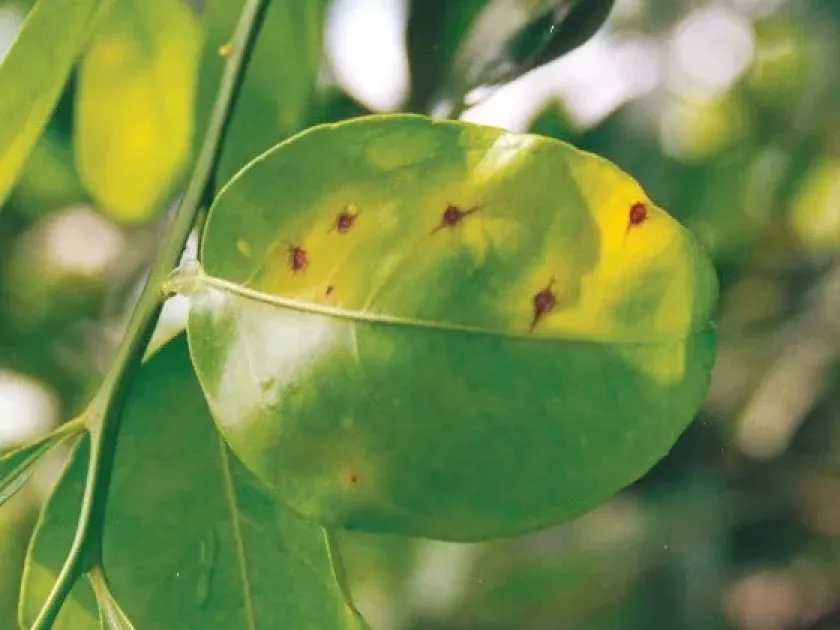
The initial signs of Alternaria leaf spot appear as small, circular, dark-brown to black spots on the leaves. As the disease progresses, these lesions tend to expand and may develop a characteristic target-like (concentric) pattern, typical of many Alternaria species.
In humid conditions, the centers of the lesions are covered with an olive-black, velvety layer of fungal growth consisting of abundant conidiophores and conidia. This mass of spores is often visible to the naked eye upon close inspection of the infected leaves.
Severe infections lead to the coalescence of lesions, causing large areas of leaf tissue to dry out and die. This often results in premature leaf drop, which significantly weakens the plant and compromises its overall health and development.
On stems and branches, the disease manifests as elongated, dark necrotic streaks or spots. These can girdle the plant, cutting off nutrient transport and causing the affected part of the plant or the entire shoot to collapse.
Symptoms on fruits, if present, appear as depressed, dark, leathery spots that may become infected by secondary decay organisms. Accurate identification often requires microscopic examination to observe the multi-celled conidia with both longitudinal and transverse septa.
Pathogen
The disease is caused by the fungus Alternaria limicola, a member of the diverse and ubiquitous Alternaria genus. This pathogen is known for its ability to survive in soil and on infected crop debris as mycelium or resistant spores for extended periods.
The primary inoculum is disseminated through wind, rain splashes, and human activity such as the use of contaminated agricultural tools. The conidia of Alternaria limicola are highly adapted to environmental stress, ensuring the survival of the fungus between growing seasons.
The fungal biology involves a rapid life cycle, which allows for multiple infection cycles during a single growing season. Upon contact with a susceptible host, the fungus uses specialized enzymes to penetrate the leaf cuticle and invade internal tissues.
The pathogenicity of this fungus is linked to the production of host-specific toxins that cause cell death (necrosis) in host plants. This allows the fungus to extract nutrients from dying tissues and successfully establish an infection site.
Genetic variability within the species and its ability to adapt to environmental pressures make Alternaria limicola a persistent threat that requires integrated management strategies to control effectively.
Conditions for development
Alternaria leaf spot thrives in conditions of high humidity and moderate temperatures. The presence of free moisture (dew or rain) on leaf surfaces is essential for spore germination and the successful establishment of the pathogen.
The fungus is most active at temperatures ranging from 18°C to 25°C. However, it can tolerate a wider range of conditions, making it a persistent problem in various climates, especially during seasons with frequent precipitation or overhead irrigation.
Dense plant canopies create a microclimate with high humidity and reduced airflow, which is ideal for the development and spread of Alternaria limicola. This is why well-ventilated crop management is essential to prevent rapid disease buildup.
Improper crop rotation, where host plants are grown in the same field for consecutive years, leads to the accumulation of high levels of inoculum in the soil. This significantly increases the disease pressure on the following season's crop.
Plant stress, often caused by poor soil fertility, drought, or pest infestations, weakens the natural defenses of the crop. Such plants are significantly more susceptible to infection and typically show faster disease progression compared to healthy plants.
Why it matters
The primary economic impact of this disease is the reduction of the photosynthetic surface area due to widespread leaf necrosis. This decline in photosynthesis directly restricts the plant's ability to produce the sugars required for healthy growth and yield formation.
Severe premature defoliation prevents the proper filling of grains, seeds, or fruits, leading to smaller sizes and reduced quality of the final harvest. In horticultural crops, the presence of leaf spots significantly lowers the market value of the produce.
The weakening of the plant's structural integrity, especially when stem lesions occur, increases the risk of lodging or stem breakage. This not only decreases yield but also complicates mechanized harvesting processes.
Secondary infections often take advantage of the necrotic tissue, leading to rot and further degrading the quality of the harvested crop. This makes it particularly challenging to store produce that was infected in the field.
In epidemic years, losses in unprotected crops can be catastrophic, often exceeding 50% of the potential yield. This necessitates timely intervention and the use of chemical or biological control measures.
Protection
The cornerstone of management is a robust crop rotation plan, which involves rotating away from susceptible host plants for at least 3-4 years. This helps in reducing the population of fungal spores that persist in the soil.
Sanitation practices, such as the removal or deep burial of crop residues after harvest, are crucial for eliminating the main sources of inoculum. Reducing the initial load of the fungus in the field significantly delays the onset of the disease.
The use of certified, pathogen-free seeds and, where available, resistant or tolerant varieties is the most effective preventative measure. Pre-planting seed treatments can also provide an early-season protective barrier against soil-borne inoculum.
Fungicidal applications should be timed based on environmental monitoring and the first appearance of symptoms. It is vital to rotate between different modes of action to prevent the selection of resistant fungal populations.
- Improve airflow through proper plant spacing and thinning.
- Maintain balanced soil fertility, with adequate potassium to strengthen plant cells.
- Manage weed populations that may act as alternative hosts for the pathogen.
- Avoid overhead irrigation during periods of high humidity to keep leaf surfaces dry.
Discussion
No discussions yet — be the first.