
Alternaria leaf spot
Alternaria pluriseptata
Description
Symptoms
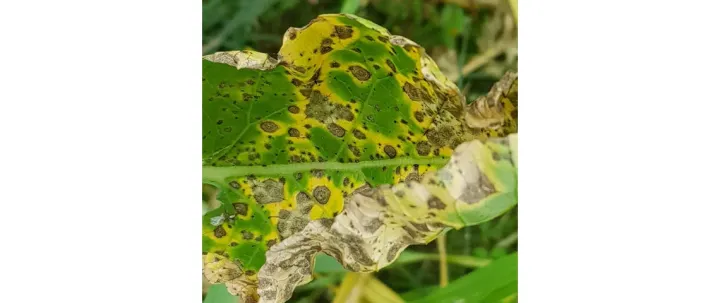
Symptoms typically begin as small, circular or irregular spots on the lower, older leaves. As the infection progresses, these spots expand and often develop concentric rings, giving them a distinct "target" appearance which is diagnostic for Alternaria species.
In humid conditions, a dark, velvety layer of fungal spores and conidiophores becomes visible within the lesions. This mass of spores is easily dislodged and facilitates the rapid spread of the disease to upper foliage and neighboring plants.
Stem infections manifest as dark, elongated lesions that can eventually girdle the stem, leading to vascular disruption, wilting, and premature death of the plant parts above the lesion. This is particularly destructive in seedling stages.
When fruit or pods are infected, they develop sunken, dark lesions that often become covered in black mold. This affects the marketability of the produce and can lead to post-harvest decay during storage or transit.
Severe infestations cause extensive chlorosis and leaf drop. As the canopy thins, the plant loses its photosynthetic efficiency, leading to stunted growth and reduced yields throughout the field.
Pathogen
The disease is caused by the fungal pathogen Alternaria pluriseptata, a member of the diverse Alternaria genus. This fungus is known for its ability to produce abundant conidia that serve as the primary inoculum for infection cycles throughout the growing season.
The pathogen survives primarily as mycelium in crop debris left on the soil surface or as spores in the soil. Under favorable conditions, these spores are dispersed by wind, rain splashes, or mechanical operations to susceptible plant tissues.
Alternaria pluriseptata is a facultative parasite, meaning it can survive on dead organic matter but rapidly infects living tissue when the opportunity arises. Its biological success is attributed to its rapid reproduction rate and tolerance to environmental stresses.
The fungus penetrates host tissues through stomata or directly through the cuticle, especially if the epidermis is compromised by insect damage or environmental stress. Once inside, the fungus colonizes the cells, causing enzymatic breakdown of plant material.
Genetically, this species exhibits high variability, which can lead to the emergence of strains that are more aggressive or resistant to certain environmental factors, making long-term control a challenge for agronomists.
Conditions for development
The development of Alternaria leaf spot is highly dependent on environmental moisture. Periods of high relative humidity, frequent rain, or heavy dew provide the surface water necessary for spore germination and infection.
Optimal temperatures for the growth of Alternaria pluriseptata range between 20°C and 28°C. However, the fungus can remain active over a wider range, with spores surviving even in periods of moderate temperature fluctuations.
Poor field management, such as high planting densities and inadequate weed control, promotes a humid microclimate within the canopy. This traps moisture and prevents rapid drying of the foliage, accelerating the infection process.
Plants under nutrient stress, particularly those lacking sufficient potassium or nitrogen, are significantly more susceptible to attack. Similarly, crops recovering from hail or insect damage show higher disease incidence due to open entry points.
In greenhouse environments, poor ventilation combined with high temperatures and overhead irrigation is a primary driver for rapid disease outbreaks, necessitating strict climate control measures.
Why it matters
The primary harm caused by this pathogen is the substantial reduction in leaf surface area available for photosynthesis. This decline leads to reduced carbohydrate production, directly impacting plant vigor and yield volume.
Premature leaf senescence and defoliation inhibit the normal development of seeds and fruits. Growers often face significant economic losses due to smaller fruit sizes and lower quality, making produce unsuitable for premium markets.
In addition to field losses, the pathogen significantly impacts post-harvest shelf life. Infected produce is prone to secondary rot, which can destroy stored inventory, leading to increased wastage and revenue loss.
Management costs increase significantly due to the necessity for multiple fungicide applications. These costs, combined with lower yields, severely reduce the profitability of the agricultural enterprise.
Furthermore, systemic infections can lead to the death of young seedlings, resulting in reduced plant stands that require costly reseeding operations and disrupt the planned crop cycle.
Protection
Effective management requires an integrated approach starting with the use of certified, disease-free seed. Seed treatments with fungicides can provide an initial layer of protection against soil-borne and seed-borne inoculum.
Crop rotation remains a fundamental practice, as it prevents the buildup of the pathogen in the soil. A minimum 3-year break with non-host crops is generally recommended to allow natural degradation of infected crop residues.
Sanitation practices such as deep plowing to bury infected debris are essential. Removing or destroying weeds that act as alternative hosts helps reduce the initial pressure of the disease in the field.
Fungicide sprays are necessary when conditions favor disease development. It is crucial to rotate chemical classes to prevent the development of resistant fungal strains and to apply chemicals preventively rather than curatively.
- Maintain balanced soil fertility to enhance plant resistance.
- Ensure adequate spacing to promote air circulation.
- Monitor fields regularly for early detection of symptoms.
- Use resistant or tolerant cultivars where available.
Discussion
No discussions yet — be the first.