
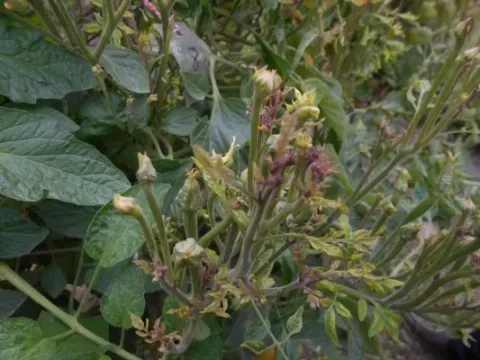
Phytoplasmosis
Ureaplasma
Phytoplasmas are specialized bacteria belonging to the class Mollicutes, characterized by the absence of a cell wall. These pathogens are obligate parasites that reside specifically within the phloem sieve elements of infected plants.
What the section contains
Phytoplasmosis
They are transmitted primarily by phloem-feeding insects, such as leafhoppers, planthoppers, and psyllids. During feeding, the insects acquire the bacteria and become long-term carriers, potentially spreading the disease for the rest of their lives.
The biology of phytoplasmas is complex, as they lack the genetic machinery to synthesize certain essential components, making them entirely dependent on the host plant's metabolism for survival and reproduction.
Because these pathogens inhabit the vascular system, they are distributed throughout the plant, causing systemic symptoms that affect the development of leaves, stems, flowers, and fruits.
Diagnosis is challenging due to the inability to culture phytoplasmas on standard artificial laboratory media. Modern molecular techniques, such as PCR, are the standard for detection in agricultural settings.
The most distinctive symptom is the 'witches' broom' effect, characterized by excessive proliferation of stunted side shoots. This occurs due to the breakdown of apical dominance in the plant.
Virescence, the greening of floral parts, is frequently observed. Petals and other floral structures lose their characteristic color and resemble foliage, leading to sterility as the plant can no longer produce viable seeds.
Plants often exhibit yellowing (chlorosis), stunting, and shortened internodes. The overall appearance is one of profound metabolic disturbance, leading to reduced vigor and small, malformed fruits or bulbs.
In woody plants, premature leaf fall, reddening of leaves, and dieback of branches are common indications of chronic infection, which often leads to the gradual decline and eventual death of the specimen.
- Witches' broom (prolific growth of thin branches).
- Greening and deformation of flowers.
- Leaf chlorosis and curling.
- Stunting and inhibited root system development.
- Sterility of flowers and fruit failure.
The spread of phytoplasmosis is strictly linked to the population dynamics of insect vectors. Warm, dry weather conditions usually favor the breeding and dispersal of leafhoppers, increasing the rate of infection.
Weed hosts serve as essential reservoirs for phytoplasmas. These wild plants harbor the bacteria during the off-season, acting as a bridge to reinfect crop fields in the following season.
High nitrogen fertilization practices can influence the attractiveness of host plants to sucking insects, indirectly facilitating the transmission of the pathogen by increasing the density of vectors.
Vegetative propagation is a critical pathway for the pathogen's long-distance movement. Using infected cuttings, tubers, or bulbs ensures the disease is passed on to the next generation of plants.
Geographical expansion of the disease is often driven by climate change, which allows vector species to survive in regions that were previously too cold for them to overwinter.
Phytoplasmosis causes severe economic losses by rendering harvests unusable. Infected plants often produce undersized, deformed fruits or fail to yield any commercial product at all.
Because the disease is systemic and currently incurable, infected crops are a total loss. This forces growers to remove and destroy entire sections of their fields or orchards to prevent further spread.
The presence of phytoplasmosis in commercial nurseries can lead to strict quarantine regulations, resulting in the destruction of entire plant stocks and loss of export markets.
Plants weakened by phytoplasma infection become highly susceptible to opportunistic secondary infections by fungi and other bacteria, further accelerating their demise.
For perennial crops, the disease represents a long-term threat as the cumulative infection rates steadily reduce the viability and productivity of the entire plantation over several seasons.
Prevention starts with the use of pathogen-free, certified planting material. Rigorous inspection of nursery stock is vital to avoid introducing the disease to clean fields.
Integrated Pest Management (IPM) focusing on the control of insect vectors is the cornerstone of management. Strategic use of systemic insecticides can significantly reduce the probability of transmission.
Removing weeds from fields and surrounding areas is a mandatory sanitation practice. Eliminating these alternative hosts effectively removes the overwintering source of the pathogen.
Physical barriers, such as insect-proof netting in greenhouse or high-value outdoor crops, can prevent vectors from reaching the plants, effectively shielding them from infection.
Rapid identification and roguing (removal and destruction) of symptomatic plants are essential to lower the inoculum pressure within a field, protecting the remaining healthy plants.