
Phytoplasmosis of plants
Mycoplasma felis
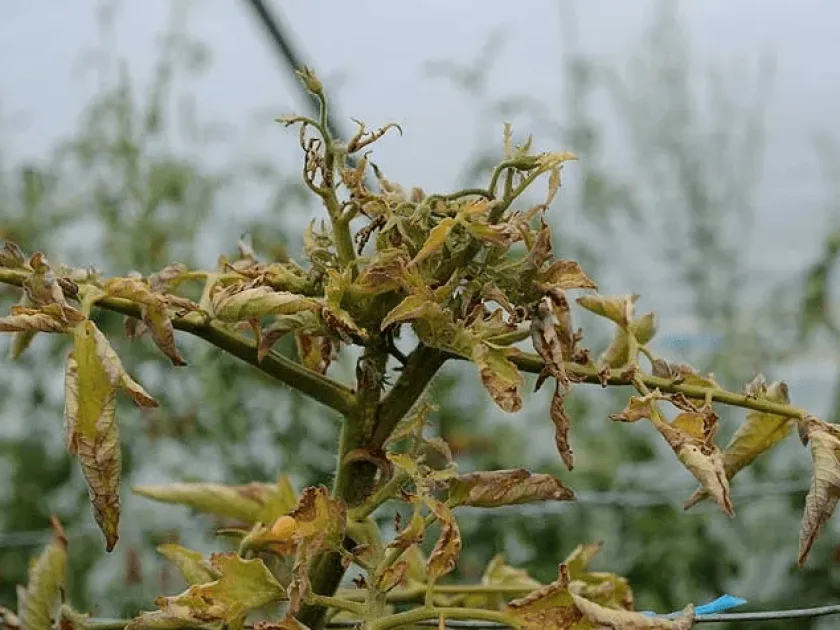
Description
Symptoms
Symptoms of phytoplasmosis are diverse, but the most common signs are systemic deformations. Typical indicators include yellowing or reddening of the leaves (chlorosis and anthocyanin accumulation).
Excessive branching of shoots is frequently observed, leading to the formation of "witches' brooms." Internodes become shortened, and the leaves appear small, narrow, and chlorotic.
Pathological floral changes are common: petals often turn green, transform into leaf-like structures, or fail to develop entirely. Fruits on infected plants are usually deformed, stunted, or fail to set.
The root system of infected plants eventually becomes suppressed and may prematurely die. The plant loses turgor, exhibits stunted growth, and appears visibly distressed throughout the growing season.
Diagnosis is challenging because symptoms can mimic nutrient deficiencies or viral infections, requiring PCR analysis for definitive confirmation.
Pathogen
The causative agents of this disease are phytoplasmas, specialized small prokaryotic organisms that lack a cell wall. Historically misclassified as mycoplasmas, they are now categorized within the genus Phytoplasma.
These microorganisms parasitize exclusively in the sieve tubes of the host plant's phloem. They are incapable of independent life in the external environment and require a specific host for replication.
The primary method of transmission between plants is through insect vectors, most commonly members of the Hemiptera order, such as leafhoppers and psyllids.
During feeding, the insect injects saliva containing phytoplasmas directly into the plant's vascular tissues. Once inoculated, the pathogen begins to multiply actively within the phloem.
The infection spreads throughout the vascular system, leading to a disruption in the transport of nutrients and plastic substances from the leaves to the roots and fruits.
Conditions for development
The spread of the disease is directly dependent on the activity of insect vectors. Warm, dry weather conditions are most favorable, as they stimulate the reproduction of leafhoppers.
Phytoplasmas survive in overwintering perennial weeds or within the insect vectors themselves. With the arrival of spring, the infection migrates to cultivated crops.
The scale of an outbreak is determined by the population density of the vectors in a specific area. In drought years, insect migration from drying weeds to irrigated crops increases significantly.
The presence of infection reservoirs near fields is a key factor in disease progression. Many species of wild plants can carry phytoplasmas asymptomatically.
Lack of crop rotation and failure to control weed populations promote the accumulation of the pathogen in the soil and the rhizosphere.
Why it matters
Phytoplasmosis causes significant yield losses, often leading to a total loss of commercial quality. Infected plants become non-competitive and eventually die.
The disease affects a wide range of crops, including solanaceous plants like tomatoes, potatoes, and peppers, as well as fruit trees and berry bushes.
Infected fruits lose their taste and flavor profiles and are unsuitable for long-term storage. In commercial orchards, phytoplasmoses can result in the need to remove entire stands.
Since viral and phytoplasmal infections are incurable, managing them requires immense expenditure on replanting and strict quarantine measures.
Infection of young seedlings often leads to their death before they reach the fruiting stage, causing substantial economic impact for agricultural producers.
Protection
The primary method of control is the use of high-quality, virus-free, and phytoplasma-free seed and nursery stock. Tissue culture propagation is the only reliable way to clean infected stock.
A crucial aspect of prevention is managing insect vectors through regular insecticide treatments during periods of their peak activity.
Strict spatial isolation between new plantings and older orchards is necessary, along with meticulous weed control to eliminate potential infection reservoirs.
Removing and immediately burning all plants showing initial symptoms is highly recommended to prevent further spread of the infection throughout the field.
- Utilizing resistant cultivars and hybrids.
- Monitoring leafhopper population density regularly.
- Eradicating reservoir weeds surrounding fields.
- Enforcing quarantine measures for incoming plant material.
Discussion
No discussions yet — be the first.