
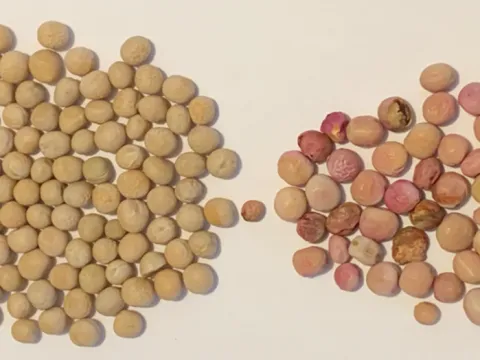
Pink bacterial spot
Erwinia rhapontici
Pink bacterial spot is caused by the Gram-negative bacterium Erwinia rhapontici, a member of the Enterobacteriaceae family. This microorganism is a facultative parasite capable of surviving for extended periods in soil and plant debris.
What the section contains
Pink bacterial spot
The pathogen is characterized by its ability to produce a specific pink pigment, which is the source of the disease's name. The bacteria invade plant tissues through natural openings like stomata or via mechanical injuries caused by pests or agricultural machinery.
The biology of the pathogen is closely tied to climatic conditions, specifically temperature, as it thrives in moderate ranges. Infected seeds are the primary source of inoculum, making phytosanitary quality control of seed lots critically important.
Unlike many other bacterioses, this species affects a wide range of host plants, demonstrating significant plasticity. The pathogen can attack both the vascular system and the parenchyma, leading to systemic infection throughout the plant.
Studying this pathogen is challenging because it can remain latent, not causing immediate plant death, which facilitates the silent spread of the bacteria across large areas through commercial grain trade.
The key external manifestation of the disease is the appearance of characteristic pink or salmon-colored spots. These spots are localized on various plant parts, most notably on wheat grains and chickpea seeds.
In cereal crops, the germ portion of the grain often shows a color change, becoming covered in a pinkish film. In severe cases, the entire grain may become coated with this substance, significantly reducing its seed and commercial quality.
In chickpeas, symptoms appear as angular spots on leaves and pods. As the infection progresses, tissues in these areas die, become brittle, and often lead to premature abscission of the affected leaves or pods.
Inside the plant tissues, bacteria multiply actively, producing mucous exudates. In high-humidity conditions, shiny droplets of bacterial slime can be observed on the surface, which are easily disseminated by wind and rainfall.
Diagnosis is often difficult because early-stage symptoms can mimic fungal infections like Fusarium; therefore, laboratory confirmation via culturing on specific media is required for accurate identification.
The development of pink bacterial spot is directly dependent on hydrothermal indicators. The most favorable conditions for the pathogen include periods with high humidity exceeding 80-85%.
The optimal temperature range for active bacterial dissemination is between +18 and +25 degrees Celsius. During hot and dry spells, the infection process slows down, although the pathogen remains viable in a dormant state.
The presence of free moisture is critical for the germination of bacterial cells and their movement across plant surfaces. Dew and fog facilitate secondary infections during the flowering and grain-filling stages.
Poor agricultural practices, such as high planting density, create a microclimate with restricted ventilation. This leads to moisture remaining on foliage for longer periods, which is an ideal scenario for mass infection.
The use of grain that has been mechanically damaged during harvest promotes the development of disease outbreaks during storage, as high humidity in warehouses stimulates bacterial proliferation.
The primary economic impact of this disease is the drastic reduction in seed germination rates. Infected seeds often produce weak seedlings that succumb to bacterial root rot in the early stages of development.
The disease leads to substantial yield losses, as affected grains are lighter in weight and lower in density. This adversely impacts the grading of commercial grain and its overall market value.
In chickpea crops, Erwinia rhapontici causes pod infections, rendering them unsuitable for food use. The seeds inside become shriveled, coated in bacterial slime, and covered in pigmented layers.
Infection in winter wheat can cause general plant weakening, reducing its cold tolerance and susceptibility to other pathogens. In high-humidity years, a significant portion of the harvest can be lost.
The presence of a bacterial film on grain creates a risk of rapid spoilage during storage, as the infection can spread from infested grains to healthy ones in storage bins when humidity levels rise.
The fundamental method of control is the use of high-quality, pathogen-free seeds. Seeds must undergo mandatory phytosanitary testing before planting.
Seed treatment with specialized bactericidal agents helps eliminate surface infection and protects seedlings. It is recommended to use copper-based products or complex formulations effective against bacterial diseases.
Crop rotation is a key prophylactic measure. Returning susceptible crops to the same field is recommended only after a 3-4 year interval to reduce the soil inoculum pool.
Weed management is necessary as weeds can serve as reservoirs for the bacteria between cropping seasons. Deep plowing of crop residues also facilitates faster mineralization of the infection background.
During the growing season, if symptoms appear, preventative spraying with copper-containing products or specialized bio-fungicides can suppress the development of bacterial colonies.