
Phormidium limosum
Phormidium limosum
Description
Symptoms
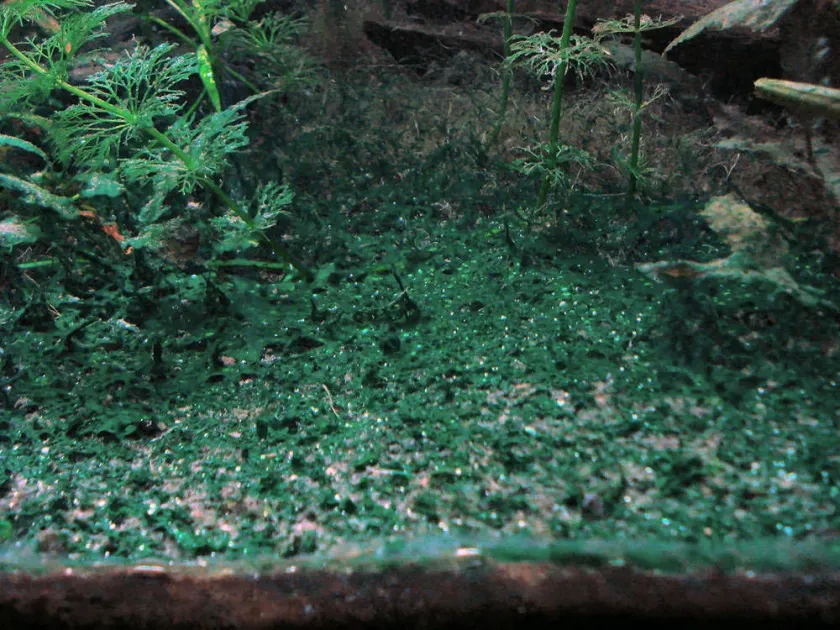
The primary symptom is the appearance of a dark green or blue-green, slimy coating on the surface of damp soil or hydroponic growth media.
This coating eventually forms a tough, leather-like mat that creates a physical barrier on the soil surface, hindering gas exchange.
Affected areas often emit a characteristic damp or musty odor, resulting from the decomposition of organic matter trapped within the algal slime.
In greenhouses, the slime can accumulate on capillary mats, irrigation lines, and filtration systems, leading to blockages and reduced efficiency.
Crops show visible stress, including stunted growth and root discoloration, primarily caused by oxygen deprivation in the rhizosphere.
Pathogen
Phormidium limosum is a species of filamentous cyanobacteria belonging to the Oscillatoriaceae family, characterized by its ability to form dense, slimy mats.
In agricultural settings, this organism is classified as a biological agent that contributes to soil silting and the formation of biofilms on substrates.
Morphologically, it consists of unbranched trichomes that move via gliding, allowing it to colonize surfaces rapidly under favorable moisture conditions.
The organism reproduces through fragmentation of its filaments, ensuring persistent colonization across wet surfaces in greenhouses and nurseries.
As a photosynthetic microorganism, Phormidium limosum relies on light and nutrient availability, making it a persistent issue in intensive cultivation systems.
Conditions for development
The development of Phormidium limosum is driven by consistently high moisture levels in the top layer of the soil or substrate.
High light intensity is a critical factor that stimulates the photosynthetic activity of the cyanobacteria, accelerating the formation of thick mats.
An abundance of nutrients, particularly nitrogen and phosphorus in irrigation water, creates the perfect environment for rapid colonization.
Poor ventilation and high humidity in the growing environment prevent the surface from drying out, which is necessary to inhibit algal spread.
Soil compaction and poor drainage are primary agronomic factors that favor the growth of this organism by maintaining stagnant water on the surface.
Why it matters
The organism's primary harm is the creation of a physical crust on the soil, which prevents oxygen from reaching the plant roots, causing suffocation.
This crust makes it difficult for seedlings to emerge, often resulting in poor crop stand and reduced uniformity in nursery production.
Hydroponic systems suffer from clogging of drip emitters and pumps due to the mucilaginous biomass, leading to increased maintenance and downtime.
The metabolism of Phormidium limosum can alter the local pH, potentially inducing nutrient imbalances that weaken the cultural crops.
The accumulation of slime provides a harbor for secondary pathogens, including various fungal species that cause root rot and stem decay.
Protection
Implementing a strict irrigation schedule that allows the top layer of the substrate to dry out between watering cycles is the most effective prevention method.
Improving the drainage and porosity of the substrate helps reduce surface moisture, which directly inhibits the growth of the cyanobacteria.
Regular sanitation of irrigation equipment and surfaces using hydrogen peroxide-based disinfectants is essential for managing established outbreaks.
Monitoring the nutrient content of irrigation water helps limit the availability of resources required for the organism's rapid proliferation.
Mechanical cultivation of the top soil layer periodically breaks the biofilm and encourages evaporation, making the environment unsuitable for Phormidium limosum.
Discussion
No discussions yet — be the first.