
Phytoplasmosis of plants
Mycoplasma hominis
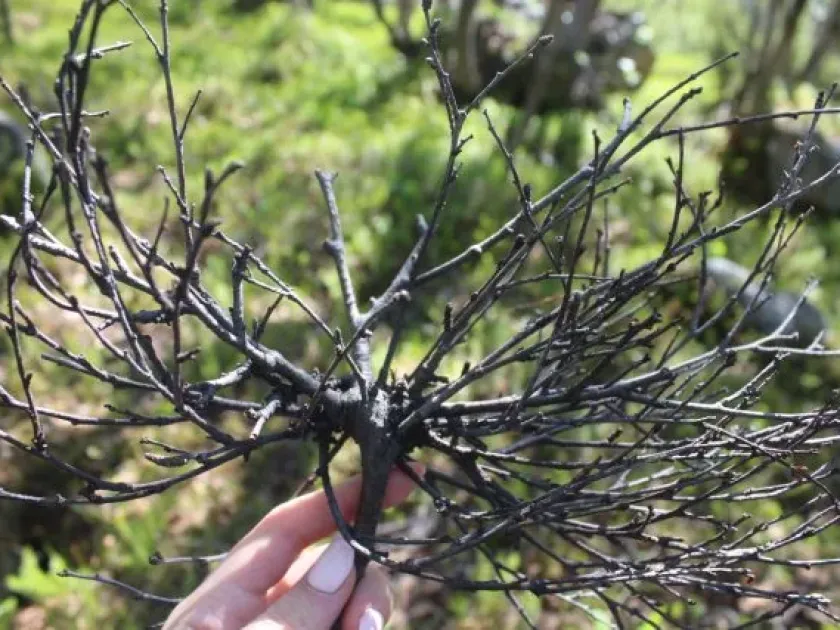
Description
Symptoms
One of the primary symptoms is chlorosis, often manifesting as yellowing or reddening of leaf margins. The affected plant usually appears stunted and weakened compared to healthy specimens.
A hallmark symptom is excessive proliferation of shoots, often referred to as "witches' brooms." These shoots are thin, shortened, and grow in dense clusters, which are typically incapable of normal development or fruit set.
Reproductive organs often show signs of virescence, where flowers turn green and petals transform into leaf-like structures. These deformations render the plant sterile, preventing any yield.
The root system often exhibits poor development and localized necrosis. This significantly compromises the plant's water and nutrient uptake, leading to wilting, especially during hot or dry conditions.
Fruit deformation and quality loss are the final stages of the infection. Fruits often become small, misshapen, hard, or completely fail to develop, rendering the harvest commercially worthless.
Pathogen
The causative agents of phytoplasmosis are specialized microorganisms called phytoplasmas, which belong to the class Mollicutes. They are obligate parasites that lack a cell wall and reside exclusively in the phloem of host plants.
Because they lack a rigid cell wall, phytoplasmas are highly adaptable in shape, allowing them to move easily through the plant's sieve tubes. They reproduce by binary fission or budding within the host's vascular tissues.
In nature, the transmission of phytoplasmas is carried out entirely by specific insect vectors, most notably leafhoppers, psyllids, and certain types of aphids. These insects acquire the pathogen while feeding on infected sap.
After an incubation period within the insect, the vector becomes capable of transmitting the disease for the remainder of its life. Infection of healthy plants occurs during subsequent feeding probes by the insect.
Phytoplasmas infect a wide range of agricultural, ornamental, and wild plant species. They cause profound systemic physiological disruptions by altering the host plant's hormonal balance and nutrient transport.
Conditions for development
The development of the disease is strictly linked to the activity and population density of insect vectors. Warm, dry weather provides optimal conditions for the migration and breeding of leafhoppers.
Weeds growing near cultivated areas serve as essential reservoirs for phytoplasmas. Perennial weeds can harbor the pathogen throughout the winter, providing a source for spring infection of crops.
Agronomic conditions, such as high plant density and poor air circulation, create favorable microclimates for pests. This significantly increases the risk of rapid disease spread across an entire field.
Plant health is also a factor, as stressed or poorly nourished plants are more susceptible to colonization. Adequate fertilization and proper care help maintain the plant's natural resilience.
Geographical location determines the prevalence of specific insect vectors, which dictates the severity and speed of phytoplasmosis outbreaks in a given region.
Why it matters
Phytoplasmosis causes significant economic damage to agriculture because there is no known effective cure for infected plants. Once the pathogen colonizes the phloem, the infection becomes systemic.
Yield losses can be catastrophic, often ranging from 30% to a total loss of the crop. In many cases, entire plantings must be destroyed to prevent further spread of the pathogen.
The disease also impacts seed quality. Seeds from infected plants often have low germination rates and produce weak, often already-infected offspring, leading to poor stand density.
In perennial crops like vineyards or orchards, the disease can necessitate complete replanting, resulting in high costs and loss of years of productive growth.
The high adaptability of phytoplasmas to various hosts makes them a persistent threat, requiring farmers to maintain constant vigilance and strictly adhere to preventive protocols.
Protection
Effective management relies on continuous monitoring and strict control of insect vector populations. The use of systemic insecticides is essential to mitigate the spread of the pathogen during the growing season.
A crucial strategy involves the systematic removal of weeds from fields and surrounding buffer zones. Eliminating these reservoirs is the most effective way to cut off the source of infection.
The use of certified, disease-free planting material is the foundation of successful control. Professional nurseries often employ thermotherapy or meristem culture to produce clean, healthy seedlings.
Spatial isolation between seed crops and susceptible commercial plantings helps prevent large-scale influxes of insect vectors. Proper crop rotation also helps break the cycle of infection.
If symptomatic plants are identified, they must be immediately removed and destroyed (burned) to prevent the spread of the disease to adjacent healthy individuals.
Discussion
No discussions yet — be the first.