
Phytoplasmosis
Tenericutes
The causative agents of these diseases are phytoplasmas, which belong to the class Tenericutes. These are specialized prokaryotic microorganisms that lack a cell wall, making them highly susceptible to environmental stress.
What the section contains
Phytoplasmosis
Phytoplasmas reside exclusively within the sieve tube elements of the plant's phloem. They thrive by diverting nutrients that the plant would otherwise use for its own growth, development, and fruit production.
As obligate parasites, phytoplasmas cannot survive independently outside of a host plant or an insect vector. Their biology is deeply integrated with the host's vascular system, which makes systemic treatments extremely difficult.
These pathogens possess unique mechanisms to alter the hormonal balance of the host. By manipulating the plant's regulatory systems, they trigger abnormal growth patterns that are characteristic of phytoplasma infections.
Transmission occurs through the feeding activity of phloem-sucking insects, such as leafhoppers, planthoppers, and psyllids. Once an insect acquires the phytoplasma, it remains a carrier for the rest of its lifespan, continuously spreading the pathogen.
One of the most characteristic signs is the yellowing of foliage, often referred to as 'yellows.' Leaves may lose their green color and become brittle or exhibit abnormal reddish-purple hues due to metabolic disruptions.
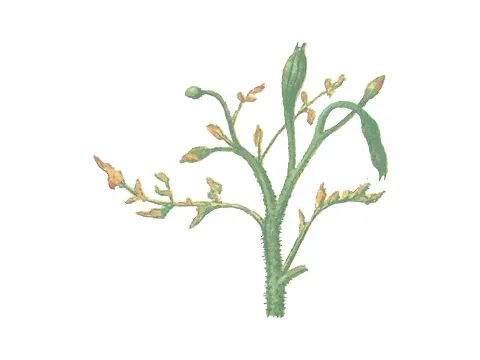
Witch's broom effect is a classic symptom, characterized by the proliferation of axillary buds that produce numerous, stunted, and closely spaced shoots. This creates a dense, messy, and overgrown appearance.
Reproductive organs often undergo severe deformities known as phyllody, where flowers transform into leaf-like structures. This process causes total flower sterility, preventing the plant from setting any fruit or seeds.
Root systems in infected plants are frequently underdeveloped or necrotic. As the pathogen blocks the flow of essential sugars to the roots, the plant gradually loses its ability to absorb water and minerals from the soil.
- Stunted plant growth and dwarfing.
- Vein clearing and leaf curling.
- Premature flower drop or fruit abortion.
- Loss of overall plant vigor and vitality.
The development and spread of phytoplasmosis are heavily influenced by the population dynamics of insect vectors. Warm, dry weather conditions usually favor the rapid multiplication and migration of leafhoppers.
Perennial weeds serve as primary reservoirs for the pathogen. Since these weeds can host the phytoplasmas throughout the year, they act as the initial source of infection for surrounding agricultural crops each season.
Environmental factors that promote the health of the insect population also directly increase the risk of disease spread. High insect pressure in a specific area is almost always associated with high disease incidence.
The incubation period within the insect vector is crucial. After feeding on an infected plant, the insect requires a latent period before it can successfully transmit the pathogen to healthy plants.
Agricultural landscapes with high plant diversity and poor weed management are at greater risk. The lack of proper isolation between wild host species and crops facilitates the jump of vectors into commercial fields.
Phytoplasmosis is considered a highly destructive threat to global agriculture because there are no curative measures once a plant is infected. The disease forces farmers to remove and destroy entire crop stands.
Economic losses can be catastrophic for sensitive crops like potatoes, tomatoes, grapes, and fruit trees. In many cases, infected plants suffer a 100% loss in marketable fruit quality and total yield.
In woody perennials, such as orchards and vineyards, the impact is long-term. Infected trees lose their hardiness and structural integrity, leading to a significant reduction in the productive lifespan of the plantation.
The pathogen's ability to remain latent for extended periods makes it particularly dangerous. Farmers may unknowingly propagate infected material, inadvertently spreading the disease to new, clean areas.
The cumulative effect of these diseases includes increased production costs due to pesticide requirements for vector control and the frequent need for total orchard or field renovation.
Management strategies primarily focus on suppressing the population of insect vectors through the targeted use of systemic insecticides. Regular monitoring and timely application are vital to interrupt the transmission cycle.
Sanitation is a cornerstone of prevention. Removing weed reservoirs and alternate hosts around the perimeter of agricultural fields is an essential step to lower the infection pressure.
Using only certified, disease-free planting material is crucial for the control of phytoplasmosis. Propagating from infected stock is a common mistake that guarantees the spread of the pathogen.
Early identification and immediate roguing of symptomatic plants help stop the progression of the disease within a field. Removed plants should be burned or buried away from the production area.
Implementation of integrated pest management (IPM) practices, including crop rotation and the selection of tolerant varieties, provides a more sustainable approach to managing the risks associated with these diseases.