
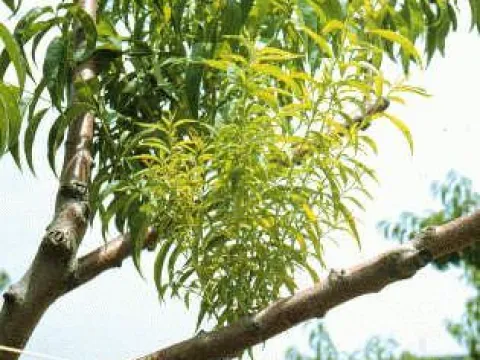
Peach yellows
Peach yellows
Peach yellows is a serious, often fatal disease caused by phytoplasmas, which are small, wall-less bacteria. These pathogens reside within the phloem tissues of the plant, disrupting the translocation of essential sugars and nutrients.
What the section contains
Peach yellows
The disease is primarily transmitted by the plum leafhopper (Macropsis trimaculata). This insect vector feeds on the sap of infected trees, acquires the phytoplasma, and subsequently spreads the pathogen to healthy peach trees.
This infection affects a variety of Prunus species, primarily peaches, nectarines, apricots, and plums. Once introduced into the vascular system, the phytoplasma systemically colonizes the tree, moving into the roots and throughout the canopy.
Transmission can also occur through grafting and the use of infected nursery stock. Because the disease is systemic, any propagation material taken from an infected parent tree will inevitably carry the pathogen, leading to new infections.
The biology of the phytoplasma makes it highly persistent within the plant host. The pathogen survives year-round in the root system, meaning infected trees act as a permanent reservoir for the disease until they die.
The most distinctive symptom of Peach yellows is the premature yellowing of leaves. Foliage may exhibit a pale, golden-yellow hue, often accompanied by a rigid or leathery texture as the disease progresses.
Affected trees frequently produce thin, spindly shoots that grow from dormant buds, resulting in a characteristic broom-like appearance often referred to as "witches' brooms." These shoots may also show premature leaf budding.
Fruit on infected trees ripens prematurely, often several weeks ahead of schedule. The fruit is typically smaller than normal, may show abnormal spotting or uneven coloration, and suffers from a significant reduction in flavor and quality.
As the disease weakens the tree, root health declines significantly. This leads to reduced vigor, increased susceptibility to winter injury, and eventually, the death of the entire tree over one or more growing seasons.
In advanced stages, the canopy becomes sparse and stunted. The tree fails to produce viable fruit, the bark may exhibit splitting, and the overall physiological balance of the plant is completely destroyed.
The economic impact of Peach yellows is severe, as the disease renders infected trees entirely unproductive. There is no curative treatment, making the removal and destruction of the tree the only option for growers.
The disease can spread rapidly through an orchard if the insect vector population is not managed correctly. An uncontrolled outbreak can lead to the total loss of a commercial orchard within a few years.
In addition to the loss of income from the current harvest, growers incur significant costs related to the sanitation and replanting of affected orchard blocks. This long-term financial strain can be devastating for small-scale operations.
Peach yellows is often treated as a major quarantine issue. This status can restrict the trade of nursery stock, fruits, and orchard materials, creating significant logistical and regulatory challenges for agricultural producers.
The cumulative damage caused by the pathogen weakens the orchard ecosystem, making trees more susceptible to secondary fungal infections and environmental stresses, further complicating management efforts.
There are no chemical controls available to cure an infected tree. Consequently, management strategies focus entirely on sanitation, vector control, and the use of certified healthy planting material.
The primary control measure is the immediate rogueing of infected trees. Once symptoms are observed, the entire tree, including as much of the root system as possible, should be removed and destroyed to prevent further transmission.
Controlling the plum leafhopper population is essential to limit the spread of the pathogen. Regular insecticide applications during the insect's peak activity season can significantly reduce the risk of new infections.
Orchardists must prioritize the use of disease-free planting stock. Purchasing trees from certified, reputable nurseries that perform regular diagnostic testing is the most effective way to prevent the initial introduction of the disease.
- Maintain a rigorous monitoring program to identify early symptoms during the growing season.
- Practice strict sanitation by disinfecting pruning tools after working with every individual tree.
- Keep the orchard environment clean by removing weeds that may harbor leafhopper populations.
- Coordinate with local agricultural extension offices to monitor regional disease presence and vector activity.