
Pear Erwiniosis
Erwinia piriflorinigrans
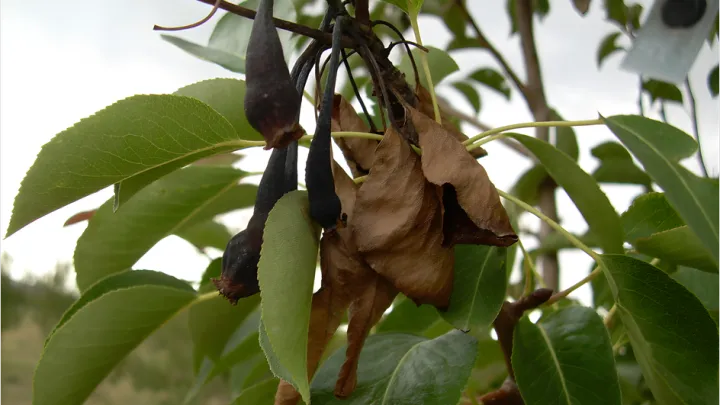
Description
Symptoms
Initial symptoms are typically observed during the flowering period, where blossoms darken, wilt rapidly, turn black, and persist on the tree rather than dropping normally.
The infection spreads downwards into the flower stalks and young succulent shoots, causing them to wither and bend into a characteristic "shepherd’s crook" shape.
Necrotic ulcers develop on the bark of infected branches, often characterized by the exudation of a viscous bacterial ooze during periods of high ambient humidity.
Foliage on infected limbs begins to blacken, often starting at the margins or along the midrib, leading to rapid desiccation and an appearance consistent with fire-damaged vegetation.
- Blackened, wilted flowers and fruit sets
- Young shoots bending into a «shepherd’s crook»
- Necrotic lesions on branches and stems
- Bacterial exudate oozing from bark
- Systemic tissue necrosis leading to tree death
Pathogen
The causative agent of the disease is the Gram-negative bacterium Erwinia piriflorinigrans. This pathogen is highly specific to pome fruits, particularly targeting pear trees and inducing necrotic tissue decay.
The bacteria primarily gain entry into the host plant through natural openings such as floral nectaries, stomata, or via microscopic wounds caused by environmental factors or insect feeding.
This microorganism is known to survive throughout the winter within infected branches, bark tissue, and woody vascular systems, acting as a perennial reservoir for infection.
The spread of the pathogen within the orchard is facilitated by wind, rain splashes, and pollinating insects, which carry bacterial clusters between blossoms and emerging shoots.
Scientific evidence indicates that while distinct from Erwinia amylovora, this pathogen shares similar clinical characteristics and poses a significant threat to vulnerable pear cultivars.
Conditions for development
The development of the disease is heavily dependent on weather conditions. It thrives in warm and humid environments, particularly during the critical bloom phase.
Temperatures ranging from +18°C to +28°C are optimal for bacterial multiplication, allowing the disease to progress rapidly within a matter of just a few days under favorable conditions.
High relative humidity, mist, and rainy weather contribute to the rapid dispersal of the pathogen, as water droplets facilitate the movement of bacteria to healthy plant parts.
The presence of insect vectors such as aphids, psyllids, and honeybees is a major factor in spreading the infection, as they interact with contaminated plant surfaces during their activity.
Agronomic practices, such as excessive nitrogen application, encourage vigorous succulent growth, which is highly susceptible to infection, thereby increasing the overall severity of an outbreak.
Why it matters
Erwiniosis poses a devastating threat to commercial pear orchards, potentially leading to total crop failure and the loss of entire tree blocks within a single growing season.
The infection disrupts the vascular system, preventing the transport of water and nutrients, which ultimately results in the dieback of branches and the systemic failure of the tree structure.
Fruit quality is severely impacted, with affected pears becoming deformed, blackened, and unmarketable due to early decay and secondary infections occurring on weakened tissue.
Management is complicated by the systemic nature of the pathogen, which often leaves tree removal and destruction as the only viable option to prevent the disease from spreading.
Economic consequences are profound, encompassing both the immediate loss of marketable yield and the high costs associated with rigorous sanitary measures and replanting programs.
Protection
Strict sanitary pruning is the cornerstone of control. Infected branches must be removed, cutting at least 30 cm into healthy tissue to ensure all pathogen reservoirs are eliminated.
Strict disinfection protocols for pruning tools, using alcohol or chlorine solutions between every cut, are essential to prevent cross-contamination within the orchard.
Preventive applications of copper-based bactericides during the bloom period provide a crucial chemical barrier that helps to suppress bacterial activity on the flower surfaces.
Integrated Pest Management (IPM) is necessary to reduce populations of insect vectors, thereby minimizing the primary pathways for bacterial entry into the tree tissue.
Planting resistant pear cultivars and maintaining adequate spacing between susceptible tree species remain the most sustainable long-term strategies for preventing the establishment of the disease.
Discussion
No discussions yet — be the first.