
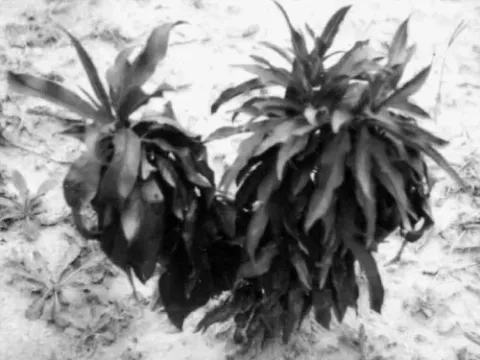
Peach rosette
Peach rosette
The primary symptom of Peach rosette is the dramatic shortening of internodes on the branches. As a result, leaves on the terminal shoots grow in tight, dense clusters that resemble rosettes, which gives the disease its common name.
What the section contains
Peach rosette
Leaves on infected trees often become chlorotic, curled, and deformed, leading to premature leaf drop. During the summer, affected trees appear stunted, weak, and lose their typical healthy green coloration.
Fruit production is severely impacted, with yields decreasing significantly or stopping altogether. The fruits that do develop are usually small, malformed, and lack the flavor profile of healthy produce.
The root system also experiences developmental issues, contributing to the overall decline of the tree. Symptoms are most visible during the peak growing season when shoot elongation is inhibited.
Severely infected trees eventually stop producing new growth and die from exhaustion. In advanced stages, branches become brittle, and the bark may crack, further weakening the tree's structure.
The pathogen responsible for this disease is the Peach rosette virus. It is a systemic plant virus that infects the plant's vascular system, specifically the phloem and xylem tissues.
The virus acts by disrupting the hormonal balance and metabolic processes of the host, which leads to the characteristic stunted growth and abnormal morphological development.
This virus is known for being highly contagious. It is primarily transmitted through grafting with infected scion wood or rootstocks, making it a critical threat in commercial nurseries.
Natural transmission occurs through specific insect vectors or soil-dwelling nematodes. These organisms carry the virus from infected trees to healthy ones during the feeding process.
Once a tree is infected, the virus becomes established systemically throughout the entire plant. There is no known cure for the virus, and the tree remains a reservoir of the pathogen for its entire life.
Disease spread is highly correlated with the presence and activity of viral vectors. Warm weather conditions promote the activity of insects and nematodes, increasing the risk of transmission in the orchard.
Poor orchard hygiene, particularly the failure to sanitize pruning equipment between trees, is a major factor in the mechanical transmission of the virus.
High-density planting configurations create favorable conditions for the virus to spread from tree to tree through contact between root systems or via vector movement.
Environmental stress, including drought, poor nutrition, or existing pest infestations, makes trees more susceptible to the impact of the virus, potentially accelerating the appearance of symptoms.
The primary source of new infections in a healthy orchard is the introduction of asymptomatic but infected nursery stock. Proper quarantine and sourcing of certified material are essential.
The economic impact of Peach rosette is catastrophic, as it leads to the total loss of marketable fruit. Infected orchards rapidly become unproductive, causing significant financial damage.
The disease leads to the premature decline and death of fruit trees. Farmers are often forced to remove infected trees early, which significantly disrupts the orchard's production cycle.
The virus compromises the tree's physiological health, preventing it from forming a healthy canopy. This disrupts photosynthesis and reduces the overall vigor of the orchard.
Peach rosette poses a severe risk to neighboring orchards and the local stone fruit industry. Without containment, a single infected tree can lead to a widespread outbreak in the region.
Due to the lack of effective treatments, the only management strategy involves the destruction of infected material, resulting in substantial capital losses and operational downtime.
The most important control measure is the use of healthy, virus-indexed nursery stock. Only trees from certified sources should be planted to prevent the introduction of the virus.
If a tree shows symptoms of Peach rosette, it must be immediately rogued, removed from the site, and burned. This prevents the infection from serving as a source for further spread.
Strict sanitation protocols must be followed. All pruning tools must be disinfected using appropriate solutions, such as formaldehyde or strong alcohol, after contact with each individual tree.
Effective management includes controlling the populations of insect vectors and nematodes through targeted pesticide or nematicide applications, which reduces the chance of viral transmission.
Regular orchard inspections are crucial for early detection. Prompt identification and removal of infected plants are the only reliable ways to protect the remaining healthy trees in the orchard.