
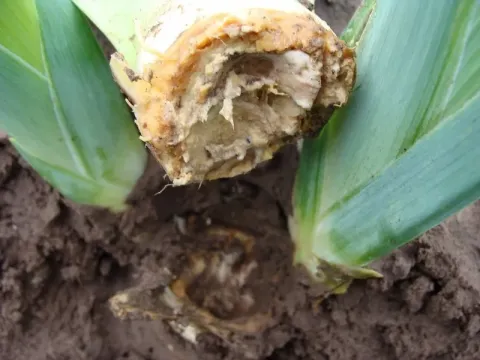
Pectobacterium odoriferum
Pectobacterium odoriferum
The causal agent of this disease is Pectobacterium odoriferum, a gram-negative bacterium belonging to the Pectobacteriaceae family. It is a facultative anaerobe known for its significant impact on various plant tissues.
What the section contains
Pectobacterium odoriferum
This pathogen exhibits high enzymatic activity, specifically by producing pectinases. These enzymes degrade the middle lamellae of cell walls, leading to tissue maceration and softening.
The bacterium can persist in crop residues, infested soil, and infected plant parts. It is easily disseminated through contaminated propagation material and farm equipment.
Unlike some other related species, P. odoriferum possesses specific metabolic characteristics that allow it to adapt to a wide range of host plants across different climates.
The infection process typically initiates when the pathogen gains access to plant tissues through mechanical wounds, openings caused by pests, or natural growth cracks.
The primary symptom is the development of water-soaked lesions that rapidly darken and expand. Over time, the affected tissue turns into a soft, mushy, and often foul-smelling mass.
A hallmark sign of the infection is the distinct, unpleasant putrid odor, which arises from the breakdown of tissues and the activity of secondary colonizing microorganisms.
When stems are infected, they soften, turn dark, and collapse, often resulting in the wilting of the entire plant due to the disruption of water and nutrient transport vessels.
In root crops and fruits, the disease typically manifests as localized rotting that quickly penetrates the interior, eventually converting the entire organ into a decayed cavity.
In humid conditions, small droplets of bacterial ooze (exudate) may appear on the surface of the infected areas, facilitating further spread of the bacteria.
The development of Pectobacterium odoriferum is strongly favored by high relative humidity and soil moisture, combined with moderate to warm temperatures, generally between 20–30 degrees Celsius.
Poor drainage and over-irrigation create saturated soil conditions, which restrict oxygen availability and promote anaerobic environments where the pathogen thrives.
Mechanical injuries resulting from weeding, harvesting, or insect feeding serve as primary entry points, significantly increasing the probability of a successful infection.
Continuous cropping of susceptible varieties without adequate rotation cycles allows the bacterial population to build up significantly in the soil over time.
Improper post-harvest handling, particularly storage in warm and poorly ventilated environments, leads to explosive disease development in stored vegetables and fruits.
Pectobacterium odoriferum causes severe economic losses by destroying plant tissues during both the growing season and the post-harvest storage phase.
The disease affects a vast range of economically important crops, including potatoes, tomatoes, cruciferous vegetables, and various ornamental plants.
In favorable conditions for the pathogen, yield losses can reach 100 percent, especially when fields remain wet for extended periods during the peak growing season.
Contaminated produce is generally unsalable and unsuitable for processing, as the soft rot spreads rapidly among healthy produce stored in the same vicinity.
The infection also undermines the quality of seed material, creating a high risk of spreading the pathogen to new planting areas through contaminated seeds or tubers.
Effective management relies on a combination of cultural practices, including long-term crop rotation and the prompt destruction of crop residues to reduce the inoculum load.
Integrated pest management is essential, as controlling insects that cause plant wounds is a critical step in preventing bacterial entry.
Using certified, disease-free planting material is the first line of defense against the introduction of the pathogen into new fields or greenhouses.
Maintaining optimal water management, improving soil drainage, and ensuring adequate air circulation are crucial for creating a less favorable environment for bacterial growth.
- Prompt removal and disposal of symptomatic plants from the field.
- Sanitization of all farming tools, machinery, and storage containers.
- Storage of crops at low, controlled temperatures to inhibit bacterial metabolic activity.