
Paulownia witches broom
Paulownia witches
Description
Symptoms
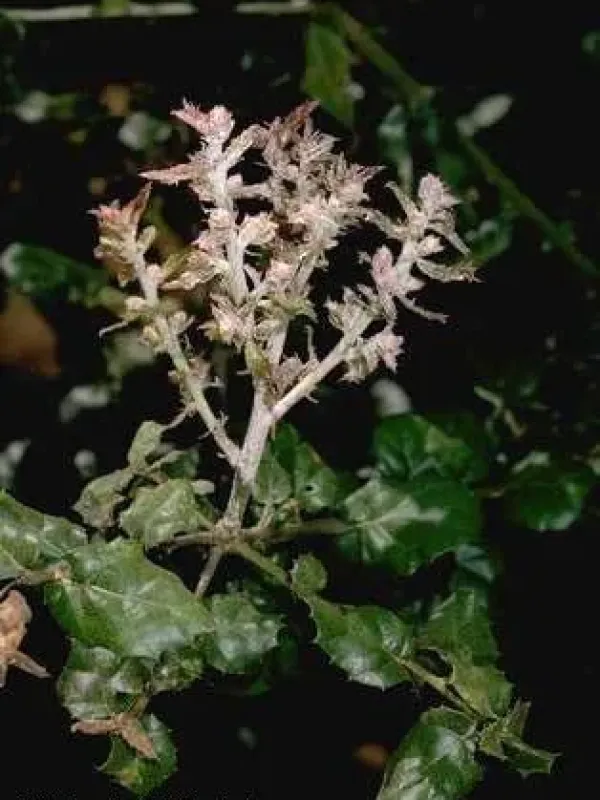
The disease is named for the dense, broom-like clusters of shoots that develop on branches, caused by abnormal bud proliferation.
Leaves on affected branches are typically smaller than normal (microphylla) and often show signs of chlorosis or yellowing.
Internodes become significantly shortened, resulting in stunted, bushy growth that prevents the development of a healthy tree structure.
Flowering is often suppressed or, if it occurs, the blossoms are distorted, further indicating systemic disruption of the plant metabolism.
The tree loses its apical dominance, making the overall silhouette of the Paulownia appear erratic and severely unthrifty.
Pathogen
The causative agent of this disease is a phytoplasma, an intracellular pathogen that inhabits the phloem tissue of the host plant.
Phytoplasmas lack a cell wall and are obligate parasites, meaning they cannot survive for long outside the plant host or the insect vector.
The pathogen disrupts the transport of nutrients and hormones within the tree, leading to the characteristic abnormal growth patterns.
Transmission occurs primarily through the feeding activities of sap-sucking insects, such as leafhoppers, which carry the phytoplasma.
Human-mediated spread is also a major concern, occurring through the use of infected cuttings or seedlings during vegetative propagation.
Conditions for development
Disease prevalence is strongly correlated with the population dynamics of insect vectors, which thrive in warm, stable environmental conditions.
Nurseries with high planting density are particularly vulnerable, as insects can easily move between closely spaced seedlings.
The movement of plant material across regions without strict quarantine protocols facilitates the introduction of the pathogen into new areas.
Environmental stress, such as water scarcity or nutrient imbalance, can make individual trees more susceptible to successful pathogen colonization.
Secondary spread often accelerates during the growing season when insect vector activity reaches its peak in plantation environments.
Why it matters
The condition causes a severe decline in growth rates, rendering the timber worthless for commercial forestry purposes.
Infected trees serve as permanent reservoirs of the pathogen, threatening the health of all surrounding vegetation in the plantation.
Significant economic losses occur because the disease is systemic and permanent, requiring the complete removal of infected individuals.
The tree's ability to resist secondary infections and environmental stressors is drastically reduced, leading to premature mortality.
Large-scale outbreaks can devastate nursery operations, forcing the destruction of entire batches of stock to contain the infection.
Protection
Preventive measures are the primary line of defense, focusing on sourcing plant material only from certified, phytoplasma-free nurseries.
Rigorous monitoring of plantations is essential to detect symptoms early, allowing for the immediate removal and destruction of affected trees.
Integrated Pest Management (IPM) involving the control of leafhopper populations is crucial to reducing the rate of secondary transmission.
- Regular inspection of the canopy.
- Sanitation of pruning tools using disinfectant.
- Elimination of nearby weeds that may harbor insect vectors.
Maintaining high plant vigor through proper fertilization and irrigation helps improve the resilience of the forest stand against potential disease pressure.
Discussion
No discussions yet — be the first.