
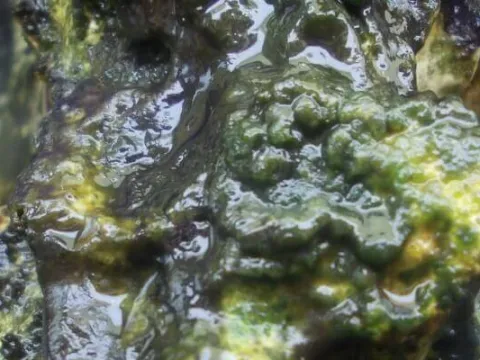
Oscillatoria algae
Oscillatoriales
The primary symptom of Oscillatoria algae infestation is the formation of a slippery, slimy film on the soil surface in greenhouses.
What the section contains
Oscillatoria algae
The color of this growth typically ranges from deep green to bluish-green, occasionally appearing brownish under intense light conditions.
As the soil surface dries, the algal mat cracks and forms hard, papery scales that effectively seal off the soil from the air.
Plants affected by these algae often exhibit stunted growth, yellowing of the foliage, and a general lack of vigor in seedlings.
A distinct, swampy or musty odor is often present in the growing area, indicating high metabolic activity of the algal colonies.
The disease is caused by filamentous cyanobacteria belonging to the order Oscillatoriales, which are prokaryotic organisms.
These organisms are known for their gliding motility, allowing them to rapidly migrate across wet surfaces to reach better light.
They produce extracellular polymeric substances that bind soil particles together, creating a dense, impermeable crust on the medium.
Oscillatoriales are highly resilient, capable of surviving periods of desiccation and rapidly resuming growth upon re-hydration.
They act as primary colonizers that fundamentally alter the micro-environment of the topsoil, often at the expense of higher plants.
Consistent overwatering or prolonged high humidity in the growing environment is the primary driver for algal proliferation.
High light intensity, especially in bright greenhouse conditions, stimulates the photosynthetic activity of these blue-green algae.
Excessive use of mineral fertilizers, particularly phosphates, provides the necessary nutrients for rapid colonization of the substrate.
Poor ventilation and air circulation prevent the soil surface from drying out, maintaining the moisture levels required for survival.
Substrates with poor structure, low porosity, and limited air capacity are most susceptible to becoming dominated by these algae.
The physical barrier formed by the algal crust creates an anaerobic environment, depriving roots of the necessary oxygen for respiration.
These algae compete directly with crops for mineral nutrients, effectively immobilizing fertilizers in the upper layer of the soil.
The excretion of metabolic byproducts may inhibit the development of root hairs and negatively impact the beneficial soil microbial balance.
Severe infestations can prevent proper germination and seedling emergence by creating a rigid physical impediment on the soil surface.
The algal mat can serve as a breeding ground for other plant pests, such as fungus gnats, further complicating the health of the plants.
Effective management requires a strict irrigation protocol that allows the soil surface to dry out completely between watering sessions.
Regular cultivation and loosening of the topsoil are essential to disrupt the algal mats and restore essential aeration to the roots.
Improving greenhouse ventilation and reducing ambient humidity levels are key preventive measures to inhibit further algal development.
Applying a thin layer of coarse, sterile sand or perlite to the soil surface can provide a dry barrier that prevents algae colonization.
- Adjust nutrient delivery to minimize surface-available phosphorus.
- Sanitize growing containers and tools to prevent cross-contamination.
- Use selective algicides if the infestation threatens crop survival.