
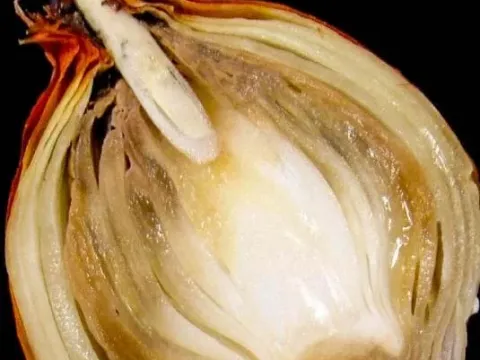
Onion bacterial rot
Pseudomonas salomonii
The causal agent of this disease is the bacterium Pseudomonas salomonii. It is a significant phytopathogen that affects onion crops during both the growing season and the post-harvest storage phase.
What the section contains
Onion bacterial rot
The disease is classified as a bacterial soft rot. The bacteria typically gain entry into the plant tissues through mechanical wounds, insect feeding sites, or the neck area during harvest.
This pathogen can persist in crop residues and soil, making it a persistent challenge for onion producers who do not maintain strict crop rotation practices.
The infection process involves the secretion of enzymes that break down cell walls, causing the characteristic softening and liquefaction of internal bulb scales.
Biological activity of this bacterium is highly dependent on moisture levels, as the pathogen utilizes free water to move and colonize healthy plant tissues.
Initial symptoms of Pseudomonas salomonii infection manifest as water-soaked lesions on the neck of the bulb, which eventually discolor to yellow or brown.
When an infected bulb is sliced, the internal scales appear soft, slimy, and emit a distinct, pungent, and unpleasant odor indicative of bacterial decomposition.
Externally, a bulb may appear firm, but applying pressure to the neck or basal plate often results in the release of a cloudy, foul-smelling exudate.
Above-ground symptoms include yellowing and wilting of the foliage, which may occur prematurely, significantly inhibiting the bulb's maturation and size development.
- Watery, translucent neck tissue.
- Slimy decay between bulb scales.
- Strong, offensive rot odor.
- Premature yellowing of onion leaves.
- Rapid disintegration of bulb structure.
Excessive humidity is the primary driver of bacterial rot. Rainy seasons, particularly near harvest time, create high-risk conditions for widespread field infection.
Warm temperatures combined with moisture accelerate the replication rate of Pseudomonas salomonii, leading to a rapid spread of the disease within the crop.
Poor ventilation during storage is a critical factor; trapped moisture and warmth allow the bacteria to move from infected bulbs to healthy ones, causing massive losses.
Agronomic factors such as overcrowding and planting in poorly drained soils limit aeration, creating a microenvironment that favors bacterial proliferation.
Insect pests, specifically onion maggots, act as vectors by creating wounds that allow the bacteria to bypass the plant's natural external defenses.
Onion bacterial rot poses a severe threat to commercial yields, causing complete loss of marketability for affected produce due to decay and odor.
The disease is particularly insidious as it may remain latent in the field and only develop into visible rot after the crop has been placed in storage.
Producers face significant financial losses due to the need for labor-intensive culling and the rejection of infected shipments by distributors.
The infection negatively impacts the overall health of the crop, reducing the plant's ability to survive and thrive during the development of the bulb.
Infected seeds or sets can serve as a primary source of inoculum, perpetuating the disease cycle in subsequent seasons if not properly managed.
Implementing a rigorous crop rotation cycle, with at least a 3-year gap between onion plantings, is essential to reduce bacterial populations in the soil.
Proper harvest technique is vital; onions should be harvested only when fully mature and allowed to dry thoroughly to ensure the neck tissues are sealed.
Storage facilities must be maintained with optimal temperature and humidity control, utilizing active ventilation to prevent the buildup of moisture around the bulbs.
Effective pest management programs are necessary to reduce mechanical damage to bulbs, thereby closing the primary entry points for the pathogen.
Choosing resistant or tolerant onion varieties and ensuring the use of high-quality, disease-free sets can significantly mitigate the risk of an outbreak.