
Oscillatoriaceae
Oscillatoriaceae
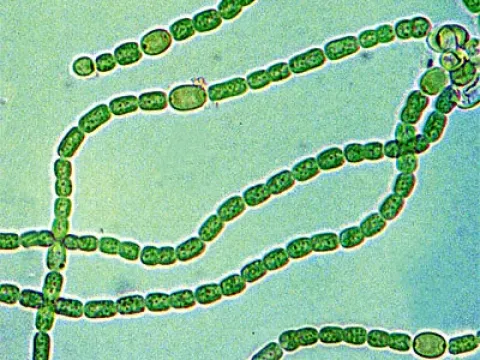
Oscillatoriaceae is a family of filamentous cyanobacteria (blue-green algae) that can become a significant issue in greenhouse and nursery environments.
What the section contains
Oscillatoriaceae
In an agricultural context, these organisms are treated as unwanted colonizers that disrupt the balance of the growth substrate surface.
The pathogen propagates through vegetative fragmentation, where tiny segments of the trichomes break off and spread via water splashes or equipment.
These organisms are highly resilient; their ability to fix atmospheric nitrogen allows them to colonize surfaces even where nutrients are scarce.
While not primary plant pathogens, their presence indicates environmental management issues that can indirectly lead to plant death.
The primary sign is the appearance of a dark green, olive, or black slimy layer covering the soil or growing media surface.
As the surface dries, the algae form a brittle, cracked crust that often peels away from the soil, creating an unsightly and harmful barrier.
On early stages, the soil surface exhibits a characteristic wet sheen or oily appearance, often mistaken for excessive moisture or fertilizer salts.
Seedlings affected by this algae layer show signs of stunted growth, chlorosis, and poor root development due to lack of oxygen.
The algae may physically encircle the stems of young seedlings, trapping moisture and encouraging pathogens that cause damping-off.
The development of Oscillatoriaceae is heavily driven by excessive humidity and constant saturation of the soil surface.
Extended light exposure, particularly from high-intensity greenhouse grow lights, provides the energy needed for the rapid photosynthesis of these algae.
High concentrations of soluble fertilizers, especially phosphorus, act as a nutrient boost that triggers massive algal blooms on the substrate.
Poor ventilation and limited air circulation prevent the top layer of the soil from drying, creating a permanent habitat for cyanobacteria.
Optimal growth temperatures for these algae typically range between 20 and 30 degrees Celsius, which is also ideal for many horticultural crops.
The major impact is the creation of a physical barrier that restricts gas exchange, causing root hypoxia and hindering normal plant respiration.
The algal crust prevents uniform water penetration, leading to dry pockets beneath the surface despite apparent superficial wetness.
Metabolic byproducts released by the algae can exert allelopathic effects, which may inhibit the germination and early growth of delicate seeds.
The accumulated biomass acts as a substrate for other harmful fungi and attracts pests like fungus gnats (sciarids) to the container.
In commercial plant production, this results in significant crop losses, reduced seedling uniformity, and increased costs for substrate management.
The most effective strategy is to implement proper irrigation practices, allowing the top layer of the substrate to dry out between watering intervals.
Enhancing air circulation and improving greenhouse ventilation helps keep the surface dry, making it difficult for the algae to survive.
Applying a thin layer of dry, sterile sand as mulch on the surface can prevent algal growth by keeping the top section dehydrated.
Regular, shallow cultivation or raking of the soil surface disrupts the structure of the algal colonies, slowing down their further expansion.
- Use only sterilized or high-quality professional substrates.
- Sanitize all greenhouse containers and tools thoroughly.
- Monitor irrigation water quality to avoid nutrient overloading.