
Sting nematode
Belonolaimus longicaudatus
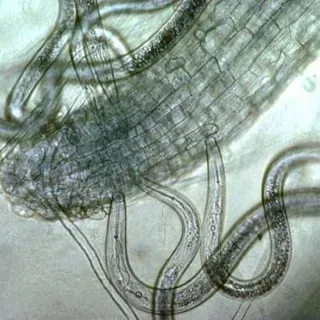
Description
How to identify
The sting nematode, Belonolaimus longicaudatus, is a highly destructive migratory ectoparasitic nematode recognized as a significant agricultural threat.
It is characterized by its relatively large body size, reaching lengths of up to 3 millimeters, which is large enough to be detected with basic magnification.
The organism possesses a long, robust stylet, a spear-like organ used to pierce plant roots and extract cellular contents with remarkable efficiency.
Unlike endoparasitic species, the sting nematode spends its entire life cycle in the soil, attacking roots from the outside without entering the tissue.
It thrives primarily in sandy soils, which provide the pore space necessary for these nematodes to migrate quickly toward host roots.
What it damages
This nematode has an exceptionally broad host range, causing severe economic damage to crops such as corn, soybeans, cotton, peanuts, and strawberries.
By feeding on root tips and secondary roots, the nematode effectively destroys the plant's ability to absorb water and essential nutrients from the soil.
Roots damaged by sting nematodes often appear stunted, brown, and pruned, resulting in a significantly reduced root mass compared to healthy plants.
The feeding sites created by the nematode also serve as entry points for secondary fungal and bacterial pathogens, leading to further root decay.
Significant yield losses are common because plants, deprived of a functioning root system, cannot withstand environmental stressors or reach their growth potential.
When it appears
Sting nematode populations are most active during the growing season when soil temperatures are favorable for both the nematode and the host plant.
The life cycle is relatively rapid, allowing several generations to occur during a single season, leading to high population densities in infected fields.
During the off-season or unfavorable temperatures, they remain in the soil profile, surviving in a dormant state until conditions improve.
Dissemination is largely passive, occurring through the movement of infested soil attached to farm machinery, irrigation water, or transplant materials.
The peak of damage typically occurs during mid-season when high temperatures and limited rainfall place the already weakened root systems under severe stress.
Signs of infestation
Field symptoms often manifest as patchy growth or irregular areas where plants appear significantly smaller and less vigorous than in surrounding zones.
Plants often exhibit symptoms of mineral nutrient deficiency, such as yellowing leaves and stunted growth, despite adequate fertilization programs.
On hot, sunny days, plants affected by sting nematodes are the first to wilt, showing a clear lack of root-to-shoot water transport efficiency.
Visual inspection of the root system reveals damaged root tips, a lack of fine root hairs, and occasional stubby appearance of the lateral roots.
In severe cases of infestation, the plants may die prematurely, leading to thin stands and substantial financial losses for the producer.
Control measures
Effective management begins with soil testing to determine nematode population levels before planting, allowing for informed decision-making.
Crop rotation remains a fundamental strategy, although it is challenging due to the nematode's ability to parasitize a very wide range of host plants.
The application of approved nematicides at planting can provide essential early-season protection, allowing the root system to develop properly.
Sanitation practices, such as cleaning farm equipment before moving from infested fields to clean areas, are critical to prevent the spread of the pathogen.
Integrated pest management, combining cultural practices like improved irrigation and soil health management, helps mitigate the impact of nematode damage.
Causes diseases · 1
Discussion
No discussions yet — be the first.