
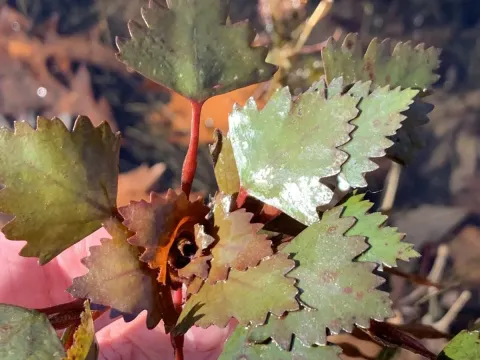
Japanese water caltrop
Trapa japonica
The Japanese water caltrop, commonly known as a water chestnut, propagates via seeds that germinate directly in the muddy bottom of water bodies. The optimal time for active vegetation begins when water temperatures reach 15-20 degrees Celsius.
What the section contains
Japanese water caltrop
Sowing is typically performed in the fall or early spring by planting mature fruits into nutrient-rich bottom substrates. Seeds can maintain viability for several years while resting in low-temperature conditions at the bottom.
For successful germination, the water depth should range between 0.5 and 2 meters. The plant is sensitive to light levels, so it is essential to avoid areas with high water turbidity when planning cultivation zones.
The rooting process requires a stable hydrological regime without abrupt changes in water levels, which could damage young shoots. In artificial cultivation, it is necessary to control planting density to prevent excessive competition.
Biologically, the water caltrop is an annual plant whose life cycle is strictly tied to seasonal water temperature fluctuations in temperate and subtropical latitudes.
The Japanese water caltrop belongs to the Lythraceae family and is a heat-loving floating crop. The main environmental requirement is the presence of stagnant or slow-moving water with high nutrient content.
Optimal water pH levels for active growth range from 6.5 to 7.5. The plant prefers silty or clayey soils saturated with nitrogen and phosphorus, which ensures the vigorous development of the leaf rosette.
Climatic conditions should match zones with long, warm summers, as fruit maturation requires a significant accumulation of active temperatures. In cases of excessive cooling, the fruits fail to gain the necessary mass and starch content.
The crop is highly sensitive to water pollution, particularly from petroleum products and heavy metals. Water quality is a critical factor determining both yield productivity and the food safety of the harvested crop.
For full development, the water caltrop requires sufficient surface area to ensure sunlight exposure for its floating leaves, which are equipped with specialized bladders to keep the plant buoyant.
The yield of Japanese water caltrop largely depends on the population density per unit area and favorable weather conditions during the flowering season. With proper management, several tons of valuable fruit can be harvested per hectare.
The fruits are hard nuts with spines (horns), containing an edible kernel. Yield in commercial settings is calculated based on the mass of dried seeds collected from the water surface after natural maturation.
The main factors limiting harvest are the difficulty of accessing overgrown areas and the need for manual or mechanized collection of nuts from the bottom. Modern technology allows for the use of specialized nets to gather mature fruits.
The quality of the fruit is determined by the starch and protein content of the kernel, which directly depends on solar activity at the end of the growing season. Under optimal conditions, the average mass of a single nut reaches 15–20 grams.
Economic use includes applications in the food industry, medicine, and cosmetology, thanks to the high content of antioxidants, vitamins, and minerals found in the kernel.
The primary threat to water caltrop plantations comes from phytopathogenic fungi that cause leaf rot when water circulation is poor. Affected areas spread infection rapidly, which can lead to the loss of a significant portion of the population.
Among pests, certain phytophagous insects and aquatic invertebrates can cause damage to stems and flower stalks. Larvae that penetrate developing fruits are particularly dangerous.
Shifts in ecological balance leading to excessive algae growth create serious competition for light and nutrients. Such conditions often cause the suppression of the water caltrop.
Mechanical damage from water transport or fishing gear can trigger the entry of secondary infections into plant tissues. Adhering to strict conservation and management regimes in cultivation areas is a mandatory requirement.
- Fungal leaf diseases
- Fruit-boring insects
- Competition from invasive algae
- Water pollution from industrial runoff
- Hydrological regime disturbances
Harvesting the Japanese water caltrop begins in late summer or early autumn when the fruits are fully mature and reach their characteristic hardness. A sign of ripeness is the darkening of the shell and the plant settling to the bottom.
Harvesting is traditionally carried out from boats or using specialized equipment that allows for scooping the fruits from the bottom silt. It is crucial to finish work before severe cold sets in, which makes water access difficult.
After collection, the fruits require thorough cleaning to remove silt, aquatic weeds, and mechanical impurities. Washing should be done in running water to prevent spoilage during storage.
Drying is performed naturally under a canopy or in specialized dryers at low temperatures. This preserves nutritional value and prevents mold growth on the shell.
The cleaned product is stored in dry, well-ventilated rooms with constant humidity, which ensures quality stability over long periods.