
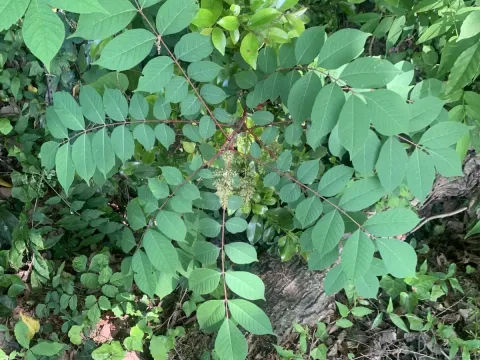
Japanese wax tree
Rhus trichocarpa
Rhus trichocarpa, commonly known as the Japanese wax tree, is a deciduous shrub or small tree belonging to the Anacardiaceae family. Native to East Asia, including regions of Japan, Korea, and China, this plant is highly valued for its striking autumnal foliage color transition.
What the section contains
Japanese wax tree
In terms of environmental requirements, this species thrives in locations with full sun exposure. It prefers well-drained, sandy loam soils that do not retain excess moisture. Proper soil preparation is essential, as the plant is susceptible to root decay if water stagnation occurs, especially during the dormant season.
Cultivation practices involve regular monitoring of moisture levels, particularly for young trees during their first few years of growth. While it is relatively hardy, young specimens benefit from mulching to protect roots from severe temperature fluctuations. Pruning should be handled with care to maintain an open canopy structure.
The plant demonstrates moderate growth rates when given adequate space and nutrients. Fertilization should be focused on the early spring period using balanced NPK mixtures to support steady leaf production. Avoid excessive nitrogen late in the season to ensure wood hardens before the first frosts.
Economically, Rhus trichocarpa is primarily used in landscaping and ornamental gardening due to its aesthetic appeal. Historically, specific species within the Rhus genus have been utilized for their sap or wax production, though Rhus trichocarpa is cultivated more for its ornamental characteristics in modern horticulture.
The plant is occasionally prone to fungal diseases, specifically powdery mildew. This is often triggered by high humidity levels and insufficient air circulation. Thinning out the branches helps improve airflow, which significantly reduces the risk of infection.
Common pests include aphids and various leaf-eating insects. Management usually involves integrated pest control methods, such as encouraging natural predators or applying horticultural oils during the early stages of infestation to prevent leaf damage.