
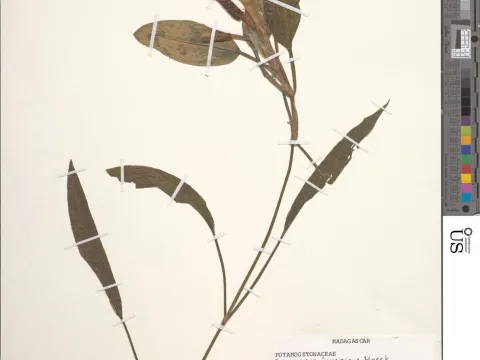
Javanese pondweed
Potamogeton javanicus
Javanese pondweed (Potamogeton javanicus) is a perennial aquatic plant belonging to the Potamogetonaceae family. It is a hydrophytic species that thrives in submerged or floating states within freshwater environments.
What the section contains
Javanese pondweed
The native range of this species is centered in Southeast Asia and tropical regions. It is frequently found in irrigation canals, ponds, and rice paddies, where it contributes to the local biological diversity and nutrient cycling.
In terms of climatic requirements, this plant prefers warm tropical to subtropical conditions. It grows best in water temperatures ranging from 20°C to 28°C, which facilitates rapid vegetative growth during the peak seasons.
The substrate is a critical factor for successful cultivation. The plant requires nutrient-rich silt or muddy bottoms to anchor its root system effectively, allowing it to extract necessary minerals from the benthic zone.
Light availability is essential for the photosynthesis of Javanese pondweed. It performs best in clear, shallow water where solar radiation can reach the submerged leaves, ensuring vigorous development throughout its lifecycle.
The main threat to Javanese pondweed is the rapid proliferation of invasive algae. These competing organisms cover the surface or suffocate the submerged parts, significantly reducing the light available for photosynthesis.
Pests such as aquatic snails and specialized insect larvae can severely damage the plant tissues. In extreme cases, these pests can consume a large portion of the biomass, leading to the collapse of the pondweed population.
Fungal pathogens represent a major health risk, especially in stagnant or poorly ventilated water. These infections typically manifest as leaf decay and stem softening, which can spread rapidly under high temperatures.
Water pollution, particularly the presence of herbicides from agricultural run-off, is highly toxic to this species. Exposure to chemical runoff often results in the immediate cessation of growth and eventual mortality of the plant.
To mitigate these threats, successful management requires monitoring water quality and ensuring adequate circulation. Maintaining the balance of the ecosystem is the most effective way to prevent disease and pest infestations.