
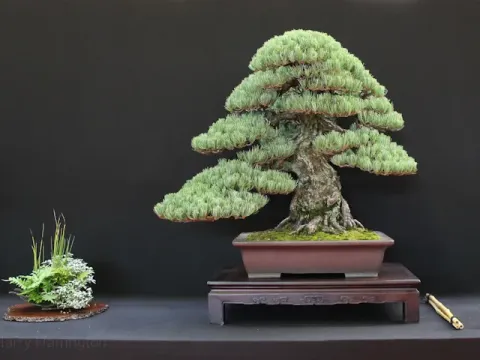
Japanese white pine
Pinus pentaphylla
Propagation of Pinus pentaphylla is primarily achieved through seeds, which require a cold stratification period of approximately 60 to 90 days to break dormancy before germination can occur.
What the section contains
Japanese white pine
The seeds should be sown in a well-draining, sterile potting mix composed of perlite, peat moss, and composted pine bark to ensure adequate aeration around the developing root system.
Maintaining a constant temperature between 15°C and 20°C during the germination period significantly improves success rates, provided the moisture levels are carefully managed.
Seedlings are highly sensitive to "damping-off" diseases, therefore the use of fungicides or ensuring excellent air circulation in the nursery environment is considered an essential best practice.
For large-scale production, grafting onto a rootstock of Pinus sylvestris or similar species is common, as this accelerates the growth of selected ornamental cultivars and ensures uniformity.
The Japanese white pine belongs to the Pinaceae family and is highly regarded in horticulture for its distinct needles, which appear in clusters of five, giving it a delicate texture.
This species thrives in full sun, requiring at least six hours of direct sunlight per day to maintain its compact, attractive structure and prevent the lower branches from dying back.
Soil requirements focus on excellent drainage; while the tree is adaptable to various soil types, it absolutely refuses waterlogged conditions, which lead to root decay and overall decline.
It prefers a slightly acidic to neutral pH soil profile and benefits from organic matter amendment to improve nutrient retention without compromising the drainage capability.
Regular maintenance includes light pruning of candle growth during the spring to manage size and shape, as well as applying slow-release granular fertilizer designed specifically for evergreens.
Pine needle scale and aphids are among the most common pests affecting this species. They feed on plant juices, causing the needles to yellow and drop if left unchecked for too long.
Fungal diseases like Needle Cast are prevalent in areas with poor airflow and high humidity. Improving the spatial distribution of trees helps significantly in reducing disease pressure.
Root rot, typically caused by Phytophthora species, is a lethal threat in poorly drained soils. Avoiding over-irrigation is the primary method of preventing this devastating infection.
For effective pest management, horticultural oils applied during the dormant season can help reduce overwintering populations of insects, while systemic insecticides are reserved for active infestations.
Vigilance during the growing season is crucial; monitoring for discoloration or lesions on the bark can provide early warnings, allowing for swift intervention before the health of the tree is compromised.