
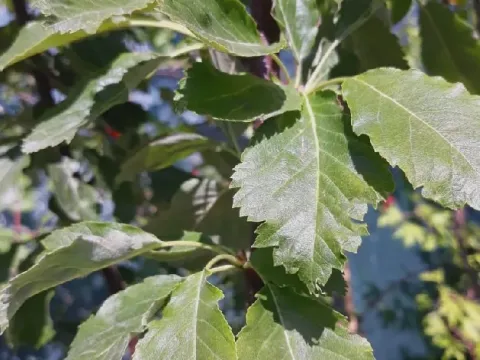
Sorbopyrus auricularis
Sorbopyrus auricularis
Sorbopyrus auricularis, commonly known as the Bollwiller pear, is an intergeneric hybrid between the common pear and the common whitebeam or rowan. It belongs to the Rosaceae family and is valued for its unique fruit and ornamental characteristics.
What the section contains
Sorbopyrus auricularis
The plant thrives in temperate climates and prefers sunny locations with good air circulation. It shows good winter hardiness, making it suitable for home gardens in regions where cold winters are common.
Soil requirements involve well-drained, fertile, loamy soils. It does not tolerate waterlogging, so ensuring proper drainage at the planting site is essential for root health and overall tree vigor.
Cultivation practices require regular irrigation during dry spells and annual pruning to maintain a balanced canopy. Providing balanced fertilization in spring promotes healthy growth and fruit production.
Its primary use is as a dual-purpose tree for fruit consumption and ornamental garden planting. The fruits are typically eaten fresh when ripe or processed into preserves, offering a unique flavor profile.
Sorbopyrus auricularis is susceptible to common Rosaceae diseases, including scab and fire blight. Monitoring the foliage and branches for symptoms of these infections is crucial for early intervention.
Monilia rot can affect the blossoms and fruits, especially during humid weather conditions. Applying protective fungicides can help mitigate the risk of these diseases spreading through the orchard.
Pests such as aphids, mites, and codling moths can attack the tree, causing foliage damage and fruit drop. Integrated pest management strategies are highly recommended for home orchardists.
Maintaining a clean garden environment by removing fallen leaves and pruning dead wood is an effective cultural practice to reduce the overwintering of pathogens and pests.
Regular inspections throughout the growing season ensure that any health issues are addressed promptly, helping the tree maintain its productivity and vitality year after year.
Harvest time for the fruits of Sorbopyrus auricularis generally falls in late summer or early autumn. The fruit's color transition from green to a golden-yellow hue signals maturity.
The fruits should be picked with care to avoid bruising, as the skin is relatively delicate. Proper handling during harvest ensures better quality for consumption or processing.
Once harvested, the fruit should be stored in a cool, dry place. Although shelf life is limited, the fruits can be used for culinary purposes shortly after being picked to capture their peak freshness.
Many growers prefer to store the fruits for a few days to improve their texture and flavor, allowing them to reach full maturity after the harvest has taken place.
As a rare and interesting hybrid, the harvest of this culture provides a unique experience for fruit enthusiasts and gardeners interested in exploring unconventional horticultural varieties.