
Spatterdock
Nuphar advena
Description
Growing requirements
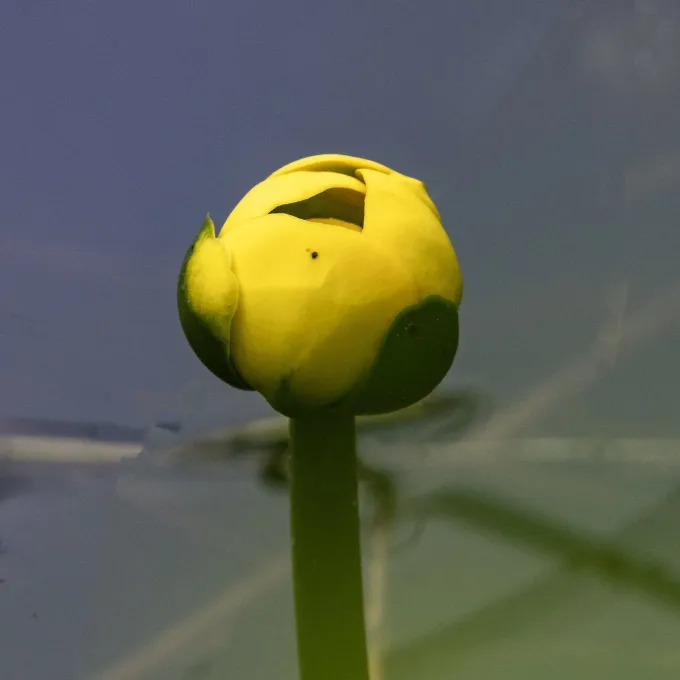
Spatterdock (Nuphar advena) is a perennial aquatic plant belonging to the Nymphaeaceae family. Originating from North and Central America, this plant is well-adapted to slow-moving or stagnant water bodies such as ponds, marshes, and slow streams.
Botanically, the plant features robust rhizomes that anchor it firmly into the substrate. The leaves are leathery and heart-shaped, capable of adapting their position from floating on the surface to rising above the water line depending on the depth.
For optimal growth, Nuphar advena requires warm water and nutrient-rich, silty substrates. The ideal planting depth ranges from 1 to 3 feet, which allows the plant to develop its characteristic thick foliage and yellow flowers.
Environmental conditions should include plenty of sunlight, as the plant is sensitive to excessive shading. While it can tolerate partial shade, maximum photosynthetic activity and blooming occur in bright, exposed aquatic environments.
Commercially and in landscape architecture, Spatterdock is highly valued for its ability to oxygenate water and provide shelter for aquatic fauna. It is an excellent choice for stabilizing pond edges and enhancing the natural appearance of wetland gardens.
Main diseases and pests
The primary pests affecting Spatterdock are leaf-eating beetles, which can skeletonize the foliage during the summer months. Vigilant monitoring is necessary to prevent significant damage to the plant's aesthetic and health.
Fungal leaf spot is a common ailment that typically arises due to poor water circulation or stagnant conditions. Maintaining a proper flow or a clean, oxygenated environment helps to mitigate the risk of fungal infections.
Competition from invasive algae and other aquatic weeds can stifle Spatterdock development. Manual thinning of the pond vegetation is recommended to ensure the plant has enough access to nutrients and light.
Root rot can occur if the substrate becomes anaerobic, particularly in heavy clay soils. Ensuring proper sediment aeration can prevent the decay of the rhizome system and promote healthier long-term growth.
Management of these threats should always prioritize non-toxic methods. Because the plant is rooted in an aquatic ecosystem, the use of chemical pesticides is discouraged to protect biodiversity and water quality.